books · Mystery · Romance

Series Review: A Curious Beginning and A Perilous Undertaking by Deanna Raybourn

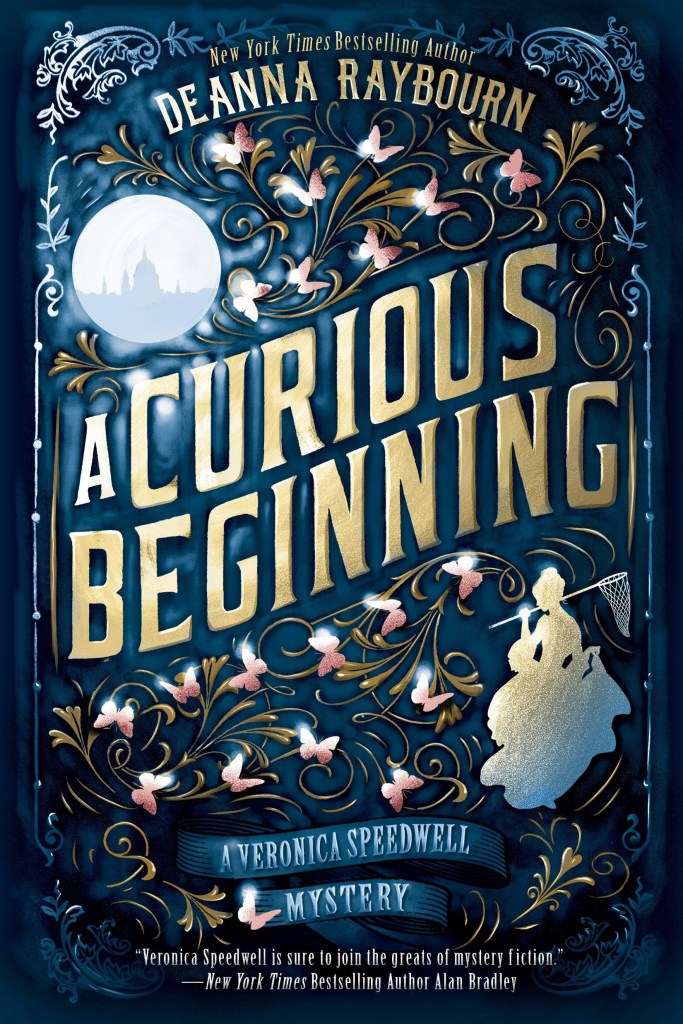
A Curious Beginning by Deanna Raybourn

The first two novels in the Veronica Speedwell mystery series have been highly entertaining. It’s been a while since I’ve been able to jump into a series that takes place in another time and still feel a connection to the characters.

Historical fiction is unique in that sense. It allows the reader insight into another time by allowing for comparison to be made to the present day without the necessity of direct parallels. On the surface, you would think that I would have little to relate to a 19th century orphan who turns out to be a closeted princess. But Veronica is one of the bluntest, sharpest, and most charismatic female protagonists, particularly of fiction more geared towards Young Adults. 

Veronica Speedwell has just buried her aunt when she comes home to a stranger burglarizing her home. It’s no matter for Veronica, who already had plans to leave the family home in search of new adventures, except for the arrival of a stranger whose motive is to help her. The Baron, as he comes to be known, is assured that Veronica is in danger, even though she is quite certain the robbery was random. 

He convinces her to travel with him to London. A young, unmarried woman, Veronica isn’t cawed by this proposition in the least. She decides to assuage this kind man’s fears and accompany him. After her arrival in London, the Baron delivers her into the watch of an old friend, Stoker. Veronica isn’t pleased at all to be passed from man to man, especially because she believes herself not to be in danger. But when the Baron is murdered, Veronica and Stoker team up to find out what happened to the Baron. 

I saw someone refer to the romance between Stoker and Veronica as a “slow burn” the other day, and boy, is it. Veronica is curt and doesn’t mince her words, telling Stoker her exact thoughts as she thinks them, whether they be inappropriate, worldly, or apt to make him blush. Stoker playfully banters with Veronica as well, but is wholly devoted to protecting her, no matter her insistence of not needing protection. Although the attraction is clearly there, their friendship is paramount, which is comforting to the reader. 

Stoker supports Veronica as she comes into new information about herself and is faced with her greatest challenge yet: entering the world of the royal family. 

As the second book unfolds, Veronica and Stoker, backdoor detectives, are hired to investigate the murder of a young female artist. Her lover and the father of her unborn baby is set to hang for the crime, so Stoker and Veronica are up against a ticking clock with limited resources. The police seem set on hanging their culprit, although shadowy forces in the background who hire Stoker and Veronica seem less convinced. 

This is probably the least plausible aspect of the novels: that two natural scientists (Stoker is a physician and taxidermist and Veronica is a lepidopterist: studier of butterflies) would be hired in any capacity to investigate a murder or stop a hanging. But that’s why it’s fun! 

The 19th Century British procedural meets the Jane Austen love story in this series. The protagonists are considered odd, but we know now that they were simply before their time. As such, these books are easy to absorb and the perfect distraction from the now, which is just what I’ve been looking for. Can’t wait to read more!
books · Thriller

Book Review: In a Dark, Dark Wood by Ruth Ware

In a Dark, Dark Wood by Ruth WareIn a Dark, Dark Wood by Ruth Ware was recommended to me a few years ago, and I just got around to reading it. As psychological thrillers go, it was solid. The plot was original- but something just fell flat for me.

Leonora is a 20-something living in London who has just been invited by an old school friend to attend a hen party (i.e. bachelorette for American folk). She’s confused by the invitation, as she hasn’t talked to Clare, the bride, in years. In the interest of being social and showing up for an old friend, Nora agrees to attend. What ensues is not your typical bachelorette party fun, but sinister.

I did not buy the plot of this novel, personally. If I went to a bachelorette party, and people I knew were acting shady and downright conniving, I would immediately be on the offensive. Nora is drawn further into herself, doubting her senses and making it easy for her to be taken advantage of.

All of Nora’s issues seem to stem from Clare- her treatment of Nora years ago, and secrets that will come out in the wash. This is a fun story, regardless of believability.

books · Mystery

Book Review: Miracle Creek by Angie Kim

Oops, I did it again. I got overly excited about a book with rave reviews, a book that’s absolutely blowing up online and on social media, and I got a little let down. Miracle Creek has been #1 on my TBR list for awhile and I’m a little bummed that I wasn’t totally into it. However, there are a lot of redeeming qualities to this book and I did enjoy it! Just maybe not as much as I hoped.
The story follows a family of immigrants from Seoul and a few other key characters as they navigate the aftermath of an explosion and a subsequent murder trial. The Paks own “Miracle Submarine,” a hyperbaric oxygen chamber that is used to treat a variety of medical conditions, including the symptoms of autism, cerebral palsy, and infertility.

Although some consider the oxygen treatment to be “quack” medicine, the Paks are excited to finally be living their American dream and hoping for the success of the future.

The author of the novel, Angie Kim, does an excellent job telling the story from multiple point of views. This writing technique upped the mystery and enticed the reader to understand how the crime possibly could have been committed by multiple characters in the novel. Each POV showed the motivations of a different character. 

Kim’s overarching and triumphant rhetoric on motherhood throughout the story is overwhelmingly troubling, but it’s also raw and shows a masterful understanding of the complexities of being a mother. She taps into the varying emotions of love, unquestioning devotion, but also the moments of weakness that motherhood forces one to confront: pain, hatred, and the occasional desire to be free of the tether of having a child.

Elizabeth’s story, however troubling, elucidates an ever-shamed aspect of motherhood. Her story brings the question of what constitutes abuse to the forefront. In today’s cultural climate, one that simultaneously shames women for breastfeeding but also hinders the rights of women to conceive, raise and treat their children, this story line was eyeopening and necessary.

Elizabeth, the mother of an autistic child, Henry, is accused of his murder. Without physical evidence, the prosecution resorts to attacking the way she has cared for his child over the course of his life. She’s subjected him to alternative therapies for his autism, treatment after treatment, to try to perfect his focus, his speech, his attention to detail, and his behavior itself. Her near-obsessive desire to “fix” Henry becomes the sole argument, the most damning evidence against her – deemed as “unnecessary” and overkill. Henry was getting better, why was she trying to make him perfect?

Elizabeth’s inner debate is fascinating. She questions herself. The conversation stemming from Elizabeth’s plight makes for great food for thought. Although some of the other characters fell a bit flat for me, I thought Kim’s personification of “the mother” through multiple characterizations showed how motherhood is different for everyone, there is no right way to parent, and those that force their opinion on other parents are often doing more harm than good.

Fantasy · Mystery

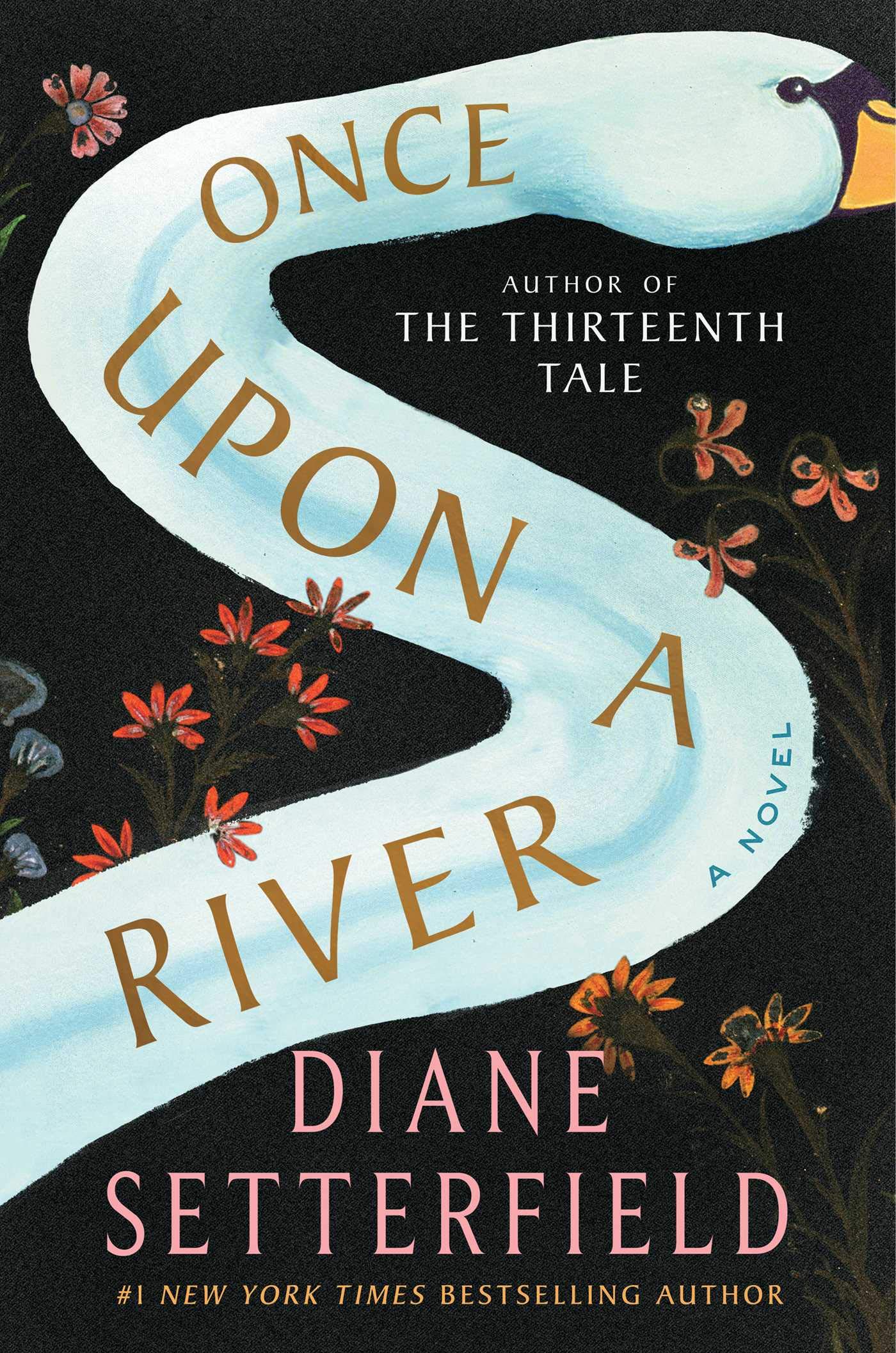
Book Review: Once Upon a River by Diane Setterfield

The river knows the secrets of small towns, and they won’t stay secrets long.

I initially became interested in Diane Setterfield when hearing the rave reviews about Once Upon a River. Not being able to get my hands on the book right away (moving expenses make it hard to buy new hardcover releases!) I settled on purchasing The Thirteenth Tale.

Although similar, Once Upon a River was miles above and, in my opinion, showcases how an author can grow and come into their craft.  

The story started slow, with such an elaborate cast of characters, introductions were lengthy and tiresome.  I wasn’t overly excited from the first few chapters.

What resonated in this novel, compounded by my reading of Setterfield’s works before, is that her writing is symbolic – sometimes overly so. In The Thirteenth Tale I was exhausted by it. I felt like the message was being beat into me. But in this novel, she really embraces the idea of the river as a focal point for the story. The tale flowed, indeed, like a river.

The Thames is the soul of several separate, intricate stories, but as Setterfield points out, it could be any river and this story could take place in any town. She writes, “And now, dear reader, the story is over. It is time for you to cross the bridge once more and return to the world you came from. This river, which is and is not the Thames, must continue flowing without you. You have haunted here long enough, and besides, you surely have rivers of your own to attend to?”

I love the addressing of the reader, the inclusion creating a prescient atmosphere. Setterfield attempts to bring a story to life as something that lives and breathes, and she achieves it. Her snaking, slick storytelling is a microcosm of the tale itself. Storytelling exists in this book in it’s most enticing form: from beginning to end, wrought with details and imagery. She leaves no stone unturned.

It is almost as if she biographizes the story: she plays with how a story is created, how a story is told and digested, how a story evolves, and how those whom the story touches evolve as well.

Like her emphasis on the symbolism of the river, Setterfield also explores the topic of duality, and how we as humans reach for the familiar even when we know it isn’t real or appropriate. We cling to mimicry in the hope that our past loves, losses, and comforts will return to us.

Setterfield stays away from the mundane, and draws the story to a satisfying conclusion without compromising realism. The mystical and magical elements and drivers in the novel act as catalysts for the characters to find their happiness in the actuality of their lives and their existence, rather than letting them lose themselves in illusion.

Above all, Setterfield has created a story, a realistic one, where real people find their happy endings in the face of adversity. Don’t we all love that?

Beach Reads · books · Mystery

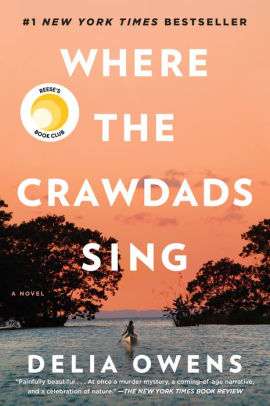
Where the Crawdads Sing by Delia Owens – Book Review

Alt= Where the Crawdads Sing

Where the Crawdads Sing by Delia Owens has become a bit of a phenomenon. If you haven’t noticed, rave reviews of the novel are popping up everywhere, and not without good reason. As a reader, and in other facets of my day-to-day life, I tend to not give in to the hype. Rather, I try desperately to resist the hyped-up books, TV shows, and trends, until I eventually give in and admit I was wrong about not believing the hype all along.

Crawdads was on my list, but it was bumped to the top when my Dad chose it for our family book club. The decision was made for me, and I’m glad.

Kya Clark is the “Marsh Girl.” Abandoned by her parents at a young age, one a battered wife, one a drunk, she grows up in a shack on the North Carolina swamp, raising herself beside the gulls and the shellfish.

Kya lives a lonesome existence. The story ebbs and flows like the tides of the marsh, ushering loneliness forth with the tide. The story conveys the state of isolation as reprehensible, and yet the most natural state of being.

Desperate to learn, Kya is taught to read by a local boy, Tate Walker. Tate is a wholesome, selfless character who serves the purpose of loving and caring for Kya above all else. Even when he makes mistakes, Tate is immediately regretful and willing to devote himself completely to making Kya trust him again.

One issue I have with the character development is Tate’s Christ-like goodness.  He’s just too good. Conversely, Kya is extremely untrusting, unwilling to ask for or accept help. Neither is a believable character, TBH.

Humans are social beings, born out of connection and bred for it. With a lack of socialization, Kya’s development parallels the marsh more so than it does her peers in the village. Kya and the marsh are symbiotic. It feeds her, teaches hers to grow and mature in her biology. In turn, she takes care of the gulls, feeds them, nurtures them like her friends. Kya’s love for the marsh is both endearing and heartbreaking.

“Needing people ended in hurt.” Kya learns this as a child of the marsh, and as she grows, she doubles down on this belief. It may be unfortunate, but Kya’s experience teaches her that love disappoints. And hurts. She just does not want to give in to that hurt, which I commend.

The masses are voraciously claiming this book to be fantastic. I say, it’s a great story. I found the ending to be satisfactory based on the distant way Kya developed throughout. Her character comes full circle in the sunset of the novel in a way that I found to be refreshingly true to the character.

Beach Reads · books · Thriller · Thriller

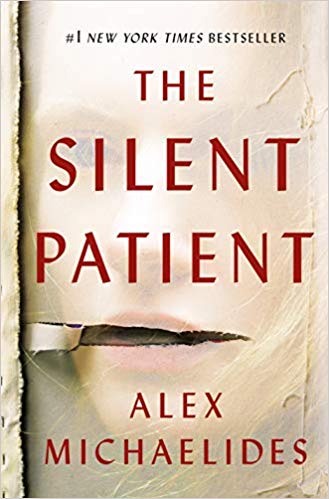
Review: The Silent Patient by Alex Michaelides

the silent patient - alex michaelides thriller NYT bestseller

Just like any typical 20 -something I seem to be drawn to psychological thrillers these days. Not to brag, but I can usually see all of the “unexpected plot twists” coming from a mile away. I am also notorious for predicting the ending of a movie 10 minutes in and whispering to my boyfriend “she did it”, which he is obviously really fond of.  I started reading The Silent Patient by Alex Michaelides with the expectation that I would be able to use my amazing skills to see the ending coming early on. However, I am pleasantly surprised to report that this was not the case.

 The Silent Patient is the story of a psychotherapist, Theo Faber, who takes a job at a high security psychiatric hospital in the hopes of triggering a breakthrough in one of the most notorious patients there, a woman who shot her husband five times without any known motive. Alicia Berenson has not spoken one word since she was charged with the murder of her husband. She is a well known local artist and her last attempt at communication was a self portrait entitled Alcestis.  To provide some background Alcestis is a lesser known Greek play in which the Queen Alcestis volunteers to die in the place of her husband Admetus. She was rescued by Hercules and brought back to life. Alcestis is the epitome of a selfless woman/wife in the setting of ancient Greece. Alex Michaelides uses Alcestis to help build Alicia Berenson’s character and to set the stage for the events leading to her husband’s death.

Theo Faber has a personal history of mental illness. He uses his experience with depression, child abuse and PTSD to help foster meaningful bonds with his patients. He is determined to help Alicia come to terms with her crime and speak out about what happened to her. As the novel unfolds we slowly learn that Theo has some unresolved issues of his own that still haunt him, and that he relates to Alicia’s situation on a very personal level.

The author does an excellent job at periodically introducing less significant characters that may or may not have played a role in the crime. This led to numerous moments where I thought I had figured it all out- but alas, I must admit I did not accurately predict this one.

Beach Reads · books

Book Review: The Flight Attendant

When in Dubai…

The Flight Attendant by Chris Bohjalian was exactly what you would expect from a book that you pick up on your way home from a trip to Florida. The story was comparable to a turbulent flight that regained its composure with an unexpected surprise landing; the elderly people on your flight would give it a few loud claps.

Our main character is Cassandra “Cassie” Bowden. She is a seasoned flight attendant known to her co-workers for disappearing with passengers during their layovers, and drinking a little too much. Despite her party girl exterior she is a reliable employee and her passengers enjoy her. We soon learn that she puts out this carefree persona to cover up a darker, more complex past. Our story begins in Dubai where Cassie spends the night with a passenger, Alex, which is something pretty routine for her. This “run of the mill” one night stand takes a sinister turn when she wakes up with her lover in bed next to her, dead, after being murdered at some point in the night.

The rest of the novel follows Cassie as she faces the consequences of her drunken actions. Cassie as a character is inherently interesting because she is a single flight attendant and also a drunk. She has gotten away with a lot in life due to her good looks and is not accustomed to having to deal with the repercussions of her poor choices. In other words she’s flighty (ba-dum bum). Being that she woke up next to the dead passenger it is assumed at first that she killed him, except she was too drunk to remember if she did or not. Going forward, much of the book depicts Cassie waiting to hear from her lawyer regarding if/when she would be charged with murder, while also continuing to work as a flight attendant and have romantic rendezvous with foreign men. 

Elena (aka Miranda) is the other female lead in the novel. She is the errand girl for a prominent Russian gangster. She is introduced to us as an acquaintance of Alex (Cassie’s dead lover) and the three share a nightcap shortly before Alex ends up bleeding out in bed. The reader learns that Elena’s father was involved with the KGB and she followed a similar path. It is clear early on that Elena is involved with Alex’s death but the reader slowly learns a lot more about the black widow as the story unfolds.

The novel has potential. There are your typical Russian ex- KGB villains, multiple romps across Europe, and spies. Although it has the ingredients for an enthralling story I found myself bored for most of it. I did appreciate that Cassie as a character ended up being deeper than I initially thought. I found her carefree, fly- off -the- seat- of -your pants attitude endearing and definitely rooted for her for the whole entirety of the book. The ending made up for an overall slow story progression but it was also somewhat confusing and I felt as if the author was pulling things out of “thin air” to get the book over with. All in all giving this one * 2 paws up *.

Categories: Beach reads, travel, spies, mystery

books · Mystery

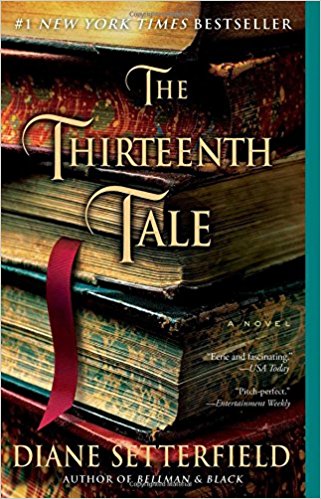
Review: The Thirteenth Tale by Diane Setterfield

I was in a bit of reading slump lately. Everything that I had been picking up was very slow. I was perusing Amazon for new releases when I stumbled on The Thirteenth Tale. Once I realized that Once Upon a River, another novel by Setterfield I’ve been hearing a lot about, won’t be released until the summer, I lost myself in the author bio and took a look at some of Setterfield’s past work. The Thirteenth Tale stood out.

This book was as eerie as described and even more unsettling than I anticipated. Margaret Lea, the daughter of a a bookshop owner, is called upon, unprompted, by famed author Vida Winter to write the legend’s biography.

Vida Winter is notorious for lying to reporters and making up outlandish stories about her past. She has not told (or faced) the truth about her life ever before, but now chooses Margaret to write the truth.

One of my biggest issues with the book was that Ms. Winter seemed way too comfortable with Margaret. For someone who had kept her life a complete secret, she is all too prepared to tell this absolute stranger her full story, without any reasoning for why. In my opinion, Vida’s justification for why she hired Margaret doesn’t explain her comfort with her. I would have expected a closeted person to have more walls up. Still, Vida Winter is a complex and satisfying character. She is a storyteller, and she is determined to make sure she remains as such, even as she is narrating the story of her own life.

Margaret is a far less exciting character. She is the daughter of a bookshop owner (a personal dream) and yet she is somehow able to make even that seem boring. She’s never read a Vida Winter book, but is called upon to bring her character to life, the only known record of the writer’s life. She wouldn’t be my first choice.

Vida Winter reveals her secrets (and some that are not hers to tell) to Margaret. Their developing friendship is heartwarming – one gets the sense neither of them has ever had a true friend.

The underlying theme of the novel is identity. Both characters struggle with it, and not in the traditional “finding yourself” way you see in most novels. Both women are twins. There is A LOT of twin symbolism in this book. Typically I find the twin/psychic telepathy theme to be overplayed, but the layers of originality in the story are too good to be mistaken for poor thematic writing.

Margaret was born with a twin, but she died after a surgery was performed to separate their connected torsos. She has lived the rest of her life with the incessant feeling that there is a piece of herself missing – a feeling that leaves her largely depressed and not all that much of an asset to society. She feels guilt at surviving. She feels lost for surviving. This faceted idea of identity resonated with me. As someone who is largely independent, and yet still has the tug of directions when making decisions, I can’t imagine the feeling of having a missing piece of myself that I feel an allegiance to, an ever-nagging shadow.

The identity crisis goes much further. It’s deep and surprising and gives the book a mysterious, gothic quality.

The crossover between Gothic and Realism is a winner. Diane Setterfield s a great storyteller and I think this is a quality read for those looking for a mystery that isn’t just based in modern-missing-girl-true-crime (looking at you, Girl on the Train). If you want a mystery with edge, a complex story, ghostly hauntings, and good writing – read this!