books · Historical Fiction

Book Review: This Tender Land by William Kent Krueger

This Tender Land by William Kent Krueger.

This Tender Land by William Kent Krueger is a marvel of modern American fiction. I truly want to shout from the internet rooftops about the injustice of this book not getting enough attention. Set in 1932 Minnesota, a gang of young orphans, brothers Albert and Odie O’Banion, 6-year-old Emmy Frost and their mute Sioux friend Mose, run away from the Lincoln Indian Trading School, where displaced young Indians are held and schooled for their alleged betterment, having been driven off the reservations and separated from their families. Albert and Odie, the only two white boys, were orphaned while traveling with their father, and so ended up at the school.

The group is on the run. They’ve left disaster behind in their wake at the Lincoln School, and their need to stay away from the Headmistress Mrs. Brickman, whom they nickname the Black Witch, is paramount. The group sets off down the Gilead River, stopping for a number of misadventures along the way.

 The protagonist, Odie, grapples with his faith as the group continues their travels south to Saint Louis. Odie begins to say that “God a tornado,” because he feels that the only way God acts in his life is in the form of tragedy. As Odie travels, his belief in the Tornado God only worsens, as he often grapples with making decisions far beyond his years in the face of adversity.

As the title may suggest, This Tender Land is a coming of age story, not just for Odie and his fellow ‘Vagabonds’ as they call themselves, but for America. It is reminiscent of a time in our country’s youth, where, befouled by misdeeds and missteps, Great Depression-era America strangled the Midwest. It was a time where hurt accumulated in the hearts of Americans and fueled the distaste of a seemingly no-good government. An impressionable orphan, Odie learns quickly that there is a notable difference between those down on their luck due to the economy and those who seem to not be affected. He can’t understand how people could live lives of luxury knowing how the other half lives. His innocence is noble and refreshing.

Odie acts with compassion towards a number of people he meets on his journey, and though he feels cursed by bad luck and circumstance, he continues to act that way. He gives to those in need, and though he is rarely rewarded, he continues to do so. This devotion slowly becomes his faith, and the pillar on which he is able to find strength in forgiveness and to find his way home.

This Tender Land is well-written, transcending genres in a way I haven’t seen before. There are traces of thriller in the plot, in addition to nuances of the mystical variety. I read this in two days and I am sad to have to leave the characters within the book covers. If you’d like to feel a little inspiration while we all keep moving through difficult times, this story will buoy you towards solace and belief in healing.
books · Historical Fiction · Science/ Alternative Fiction

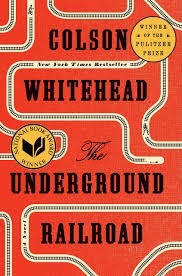
Book Review: The Underground Railroad by Colson Whitehead

The Underground Railroad by Colson Whitehead

The Underground Railroad by Colson Whitehead was a deviation from the norm in my reading list. Whitehead takes a solidified past event, and uses fictional elements to create a subversive retelling of pre-Civil War America. The fictionalization creates a dystopian past, where relevant modern-day issues are planted like weeds, showing how those issues and prejudices have thrived into the modern day.

Cora is a strong-willed self-preservationist. She lives on a plantation in Georgia, owned and operated by the Randall family, where her mother and grandmother were also slaves. Cora’s mother Mabel was a runaway slave, getting away from the plantation and never being caught. Cora is haunted by her mother’s decision to abandon her daughter, and by the fact that mother is likely living in the North, free from imprisonment and persecution.

Cora is convinced by a friend to run. They set off in the dead of night, making their way into South Carolina. There they find peace, a happy sanctuary, but it’s later discovered that far worse things are happening to free blacks there. Cora needs to continue to run, because there is a known slave hunter after her.

Each of the states she ends up in poses another threat to her freedom. In South Carolina, though the practices were radically better than Georgia, she finds that doctors are “persuading” young black women to be on birth control or forcing them to terminate pregnancies, showing that an underhanded abuse through sterilization is rampant.

After a close call with her pursuer, Cora ends up in North Carolina, where daily hangings in the town square are a source of entertainment. Cora can hear the clapping from her cell in an abolitionist’s attic. Juxtaposed with South Carolina, where blacks were largely free, or so it seemed, North Carolina appears completely outlandish.

This is the unique quality of the novel. By creating such different circumstances in each state, Whitehead is able to create a story where hangings and public displays of anti-slavery sentiment seem rash, when in reality, this was a rampant practice throughout the south during the pre-Civil War era. By fictionalizing certain elements of the novel, Whitehead turns our understanding of ‘acceptable’ upside down. As the book progresses, the reader is inclined to accept that South Carolina, with its own set of problems, was better. When in reality, none of the places Cora lands in are acceptable for her.

Whitehead created the novel around the idea that the Underground Railroad was just that, a true railroad. In reality, the Underground Railroad was a series of houses. Here, it is similar, although there are stations under houses, where escapees can follow to their next destination. I didn’t find that the railroad concept added much to the story, aside from muddying the waters of ‘then’ and ‘now’ further to show the reader how prevalent these sentiments are.

Overall, I thought the book was thought-provoking and different. It brought certain questions about antebellum America to the surface while stifling others. It also strayed from the typical slave-memoir format, and featured a protagonist who was fearful, but never cowed in the face of fear, which may seem unrealistic. Cora’s determination is palpable, and her journey is one worth following.

books · Mystery · Romance

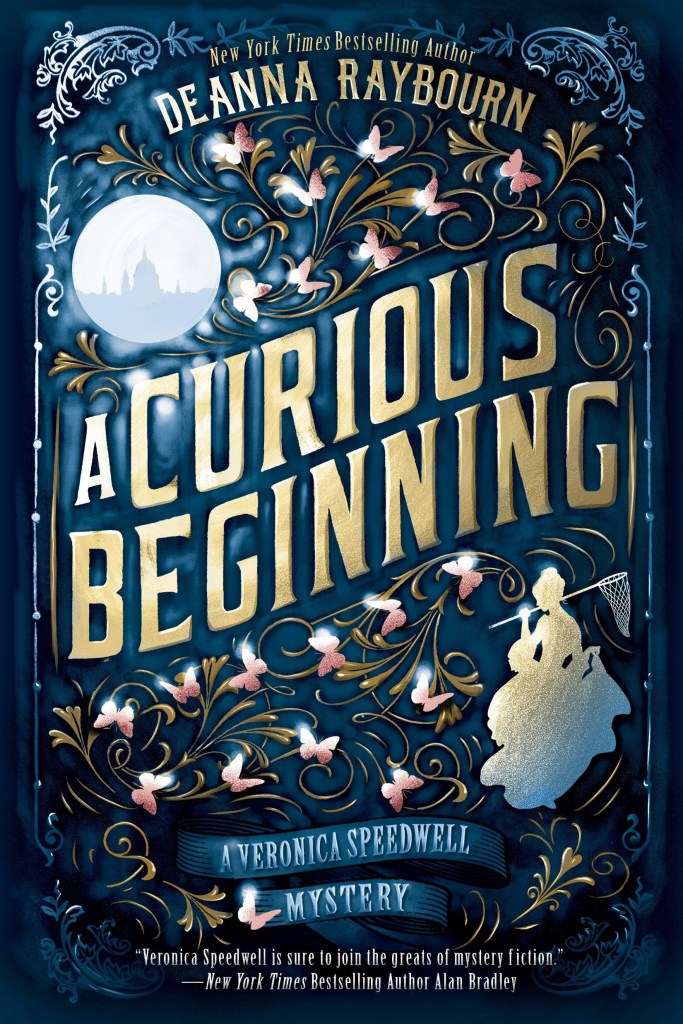
Series Review: A Curious Beginning and A Perilous Undertaking by Deanna Raybourn

A Curious Beginning by Deanna Raybourn

The first two novels in the Veronica Speedwell mystery series have been highly entertaining. It’s been a while since I’ve been able to jump into a series that takes place in another time and still feel a connection to the characters.

Historical fiction is unique in that sense. It allows the reader insight into another time by allowing for comparison to be made to the present day without the necessity of direct parallels. On the surface, you would think that I would have little to relate to a 19th century orphan who turns out to be a closeted princess. But Veronica is one of the bluntest, sharpest, and most charismatic female protagonists, particularly of fiction more geared towards Young Adults. 

Veronica Speedwell has just buried her aunt when she comes home to a stranger burglarizing her home. It’s no matter for Veronica, who already had plans to leave the family home in search of new adventures, except for the arrival of a stranger whose motive is to help her. The Baron, as he comes to be known, is assured that Veronica is in danger, even though she is quite certain the robbery was random. 

He convinces her to travel with him to London. A young, unmarried woman, Veronica isn’t cawed by this proposition in the least. She decides to assuage this kind man’s fears and accompany him. After her arrival in London, the Baron delivers her into the watch of an old friend, Stoker. Veronica isn’t pleased at all to be passed from man to man, especially because she believes herself not to be in danger. But when the Baron is murdered, Veronica and Stoker team up to find out what happened to the Baron. 

I saw someone refer to the romance between Stoker and Veronica as a “slow burn” the other day, and boy, is it. Veronica is curt and doesn’t mince her words, telling Stoker her exact thoughts as she thinks them, whether they be inappropriate, worldly, or apt to make him blush. Stoker playfully banters with Veronica as well, but is wholly devoted to protecting her, no matter her insistence of not needing protection. Although the attraction is clearly there, their friendship is paramount, which is comforting to the reader. 

Stoker supports Veronica as she comes into new information about herself and is faced with her greatest challenge yet: entering the world of the royal family. 

As the second book unfolds, Veronica and Stoker, backdoor detectives, are hired to investigate the murder of a young female artist. Her lover and the father of her unborn baby is set to hang for the crime, so Stoker and Veronica are up against a ticking clock with limited resources. The police seem set on hanging their culprit, although shadowy forces in the background who hire Stoker and Veronica seem less convinced. 

This is probably the least plausible aspect of the novels: that two natural scientists (Stoker is a physician and taxidermist and Veronica is a lepidopterist: studier of butterflies) would be hired in any capacity to investigate a murder or stop a hanging. But that’s why it’s fun! 

The 19th Century British procedural meets the Jane Austen love story in this series. The protagonists are considered odd, but we know now that they were simply before their time. As such, these books are easy to absorb and the perfect distraction from the now, which is just what I’ve been looking for. Can’t wait to read more!

Historical Fiction

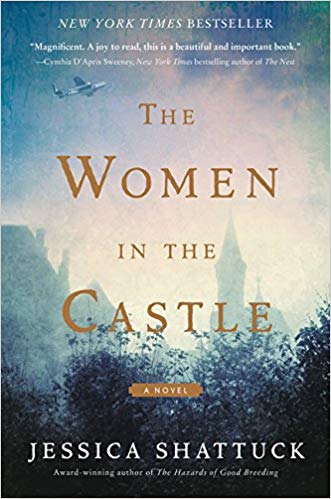
Book Review: The Women in the Castle by Jessica Shattuck

With so many WWII era historical fiction books on the market, The Women in the Castle has the potential to get overlooked. It’s been sitting on my shelf for a few months, but I finally took the time to read it. I’m glad that I did, because it gave me a thoroughly different perspective on the affected people of WWII, highlighting the lives of German women that also had to live with the fallout of being members of a defeated country.

As Germany is attempting to rebuild, three women come to live together at an old castle in Ehrenheim, Germany. Marianne Von Lingenfels, who the castle now belongs to, has vowed to take in the wives of her dead husband’s peers – widowed women whose husbands may have also been resisters of Hitler and now have nowhere else to turn. Benita Fledermann, the wife of Marianne’s good friend Connie Fledermann, comes to live with her along with her son Martin. Later, Ania Graberek also finds solace at the castle with her two sons.

There was a quote that stood out to me about halfway through the novel. “But what are people without their faces? How could you know a man if you can’t see his face?” (198). Marianne asks this of Ania. Marianne is very straightforward, and she believes the world to be black and white – you are either a Nazi supporter or you are not, you are a resister, or you are complicit, you are strong or you are weak. There is no gray area. The reader finds out quickly that Ania and Benita live their lives far more in the gray area, and it is quite possible that they have secrets hiding behind different faces.

The women form a bond through co-parenting, navigating small rations, displaced soldiers who intimidate them on their own land, and their own personal post-war troubles. Benita is a softer woman, easily manipulated. Her demeanor troubles Marianne, who is so adamant about right and wrong. Benita is just seeking solace after the war – she finds love with an ex-Nazi, and Marianne is completely against the arrangement. But Benita asks, “Don’t you want to forget?” She doesn’t want to think about the past any longer, while it seems that Marianne holds on to the past like an anchor, weighing her down.

Ania has her own demons that resurface after the war as well. Finding out her past transgressions, Marianne is judgmental and harsh, again assuming that all situations are dichotomous.

The storyline was riveting, and the characters were staunch. I felt that Benita’s character could have evolved more. I wanted a better ending for her.

The Women in the Castle discusses difficult topics, including the subject of Hitler’s luster as a leader. There is an understanding in the novel that not all of Hitler’s propaganda and shiny promises that enraptured Germany from the beginning came with a heavy hand and clear-cut genocide, but were concealed within promises of a better, more wholesome, self-sufficient country, promises that ordinary people were excited to believe in, hoping for better for their families. There are sides to every story, and this novel forces us to digest that, even if we may not want to remember the uglier sides.

Historical Fiction · Romance

Book Review: A Fire Sparkling by Julianne MacLean

I acquired A Fire Sparkling as an Amazon First Reads book on my Kindle, free with my Amazon prime membership. I never get overly excited about free books, as I feel the stories are usually not that great. A Fire Sparkling was surprisingly charming, intelligent, and heartwarming.

April and Vivian Hughes are identical twins who reunite as World War II picks up speed. Vivian is the wife of a Cabinet Ministry member, and April has just returned from Germany, where she had been involved with a German officer. Sure of his merits as a standup man, regardless of his fighting for the Nazi party, April is convinced that once the war is over, she will be reunited with Ludwig and he will have denounced Germany and Hitler, only having been involved because of his German roots.

Vivian meets a sad fate, and her dying wish is that April will assume her identity. Pregnant with Nazi Ludwig’s child, April is sure to be sent to an internment camp if they figure out her involvement with a German. April grants Vivian’s dying wish and is blessed to live out most of the war without consequence.

Her ability to speak perfect French brings her face first with an opportunity to go undercover as a spy in France at the height of the war, and all secrets are threatened with exposure. April is asked, “You will be living a lie, you must lose yourself completely in another identity. Do you think you will be able to do that?” Her response: ‘Yes,’ I replied with absolute confidence. ‘I know I can.’

I typically don’t enjoy any story that relies on the use of identical twins. It seems like a bit of a lazy way to craft conflict. MacLean is able, however, to create great distinction between April and Vivian. They are two very different characters, and they both have their stories told.

A Fire Sparkling kept me guessing until the end, and had some great modern romance mixed in as well. I thoroughly enjoyed all of the intertwined story-lines and would be quick to read another Julianne MacLean novel in the future.

books · Historical Fiction

Book Review: The Island of Sea Women by Lisa See

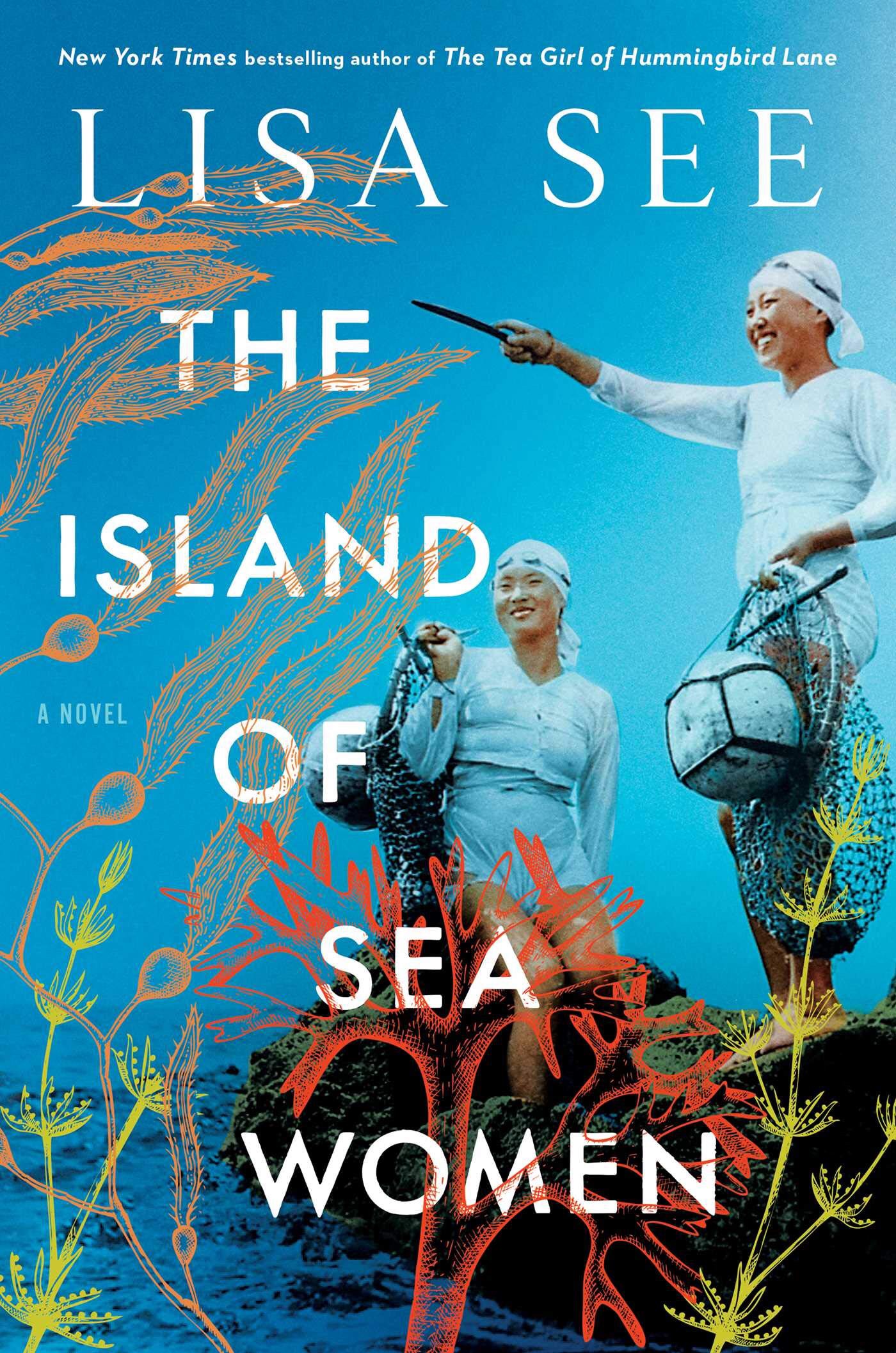
Sometimes, you should judge a book by its cover. This was my favorite book of 2019, and I based my purchase almost entirely on the interesting cover with two old ladies. As I brought the book home, it was a serious underdog, being beat out book after book with others I’d bought and borrowed. Finally, I picked this up last week after buying it at the Tattered Cover Bookstore on vacation in Denver in May. I was not disappointed.
The number of Asian-American coming-of-age books the New York State curriculum force-fed me and my peers in middle and high school (I’m looking at you Joy Luck Club and Memoirs of a Geisha) has conditioned me to avoid Asian literature. I never enjoyed anything that we were told to read. It wasn’t relatable to me and I wrote it off. With the recent resurgence of all different types of multi-cultural fiction, I’ve been trying to diversify the stories I read to incorporate some stuff that might not be the most relatable for me, but is still very worthwhile.

The Island of Sea Women spans pre- World War II and wartime Korea, detailing Korean occupation by the Japanese and by the Allies. Japanese occupation of Korea began in 1910. This story begins with a distinct air of unrest with the Japanese- although there isn’t outright war, the Korean natives stay as far from Japanese insurgents and soldiers as they can.

The body of the story follows two female friends and their journey through life as haenyeo. Haenyeo are female divers who reside on the Korean island of Jeju, where a family living is made primarily by the female mother, who dives into the sea to collect food (primarily seaweed, clams and abalone, but sometimes octopus and larger finds) and other sea life to sell for income. The haenyeo collective is a matriarchal society, one that stands juxtaposed to the male dominated societies of the West, particularly in the 1940s.

First and foremost, I am grateful for having read this book because of what it taught me about Korean history. My grandfather was in the Korean War and I am ashamed to admit I knew close to nothing about the United States’ role in the emancipation of South Korea from Japan and North Korea, never mind anything about Korea itself.

Even better, the story of female friendship between Young-sook and Mi-ja. Mi-ja’s family were Japanese “collaborators” – a term thrown around pretty loosely. Her father worked in a Japanese factory on the Korean mainland. Orphaned at a young age after moving to the island of Jeju with her father, Mi-ja is taken under the wing of Young-sook’s mother, who is the chief of the village diving collective. She teachers the young girls to dive as haenyeo, to provide for their families as true Island women do.

Young-sook and Mi-ja’s lives deviate amidst a backdrop of world war. Mi-ja is arranged to marry a man from a Japanese collaborating family. Her similarities to Young-sook dwindle and Young-sook finds it harder and harder to maintain her sisterhood with Mi-ja.

War strikes the island, bringing tragedy to Young-sook’s family. Her losses are symbolic to her of Mi-ja’s insistence on not helping Young-sook’s family in their time of need. Surely her husband’s political ties could save them all? Her relationship with Mi-ja is never the same.

Haenyeo are known for fortitude, determination and strong will. Young-sook embodies these without apology. It is seen as a benefit for haenyeo to be this way, to endure in the face of adversity, but I think this contributes to Young-sook’s loss of oversight and her inability (or direct negligence) to sympathize with her friend.

There are secrets between Mi-ja and Young-sook that enable them to never understand each other. There is death between them before they can heal their wounds. If Young-sook has been willing and able to embrace her friend in her own lowest time with sympathy rather than judgement, she would have come to easier realizations. Instead she harbors resentments, using her strength of character to put up an impenetrable wall against her friend.

The things lost between them are devastating. In a time when there is infinite loss and terror, two friends are driven further into turmoil, against each other, following societal lines of demarcation.

Lisa See’s novel details the lives of strong, immovable women, women I found to be extremely worthy, laudable, and noble. She highlights, however, how even the most noble can be flawed and can be inhibited from making the best choices as humans, even if they believe they are following an understanding of what’s right.

See’s writing is so enjoyable- like a refreshing dip in the ocean. May we learn from the haenyeo and from these characters something about grit, perseverance, and empathy.

Historical Fiction · Romance

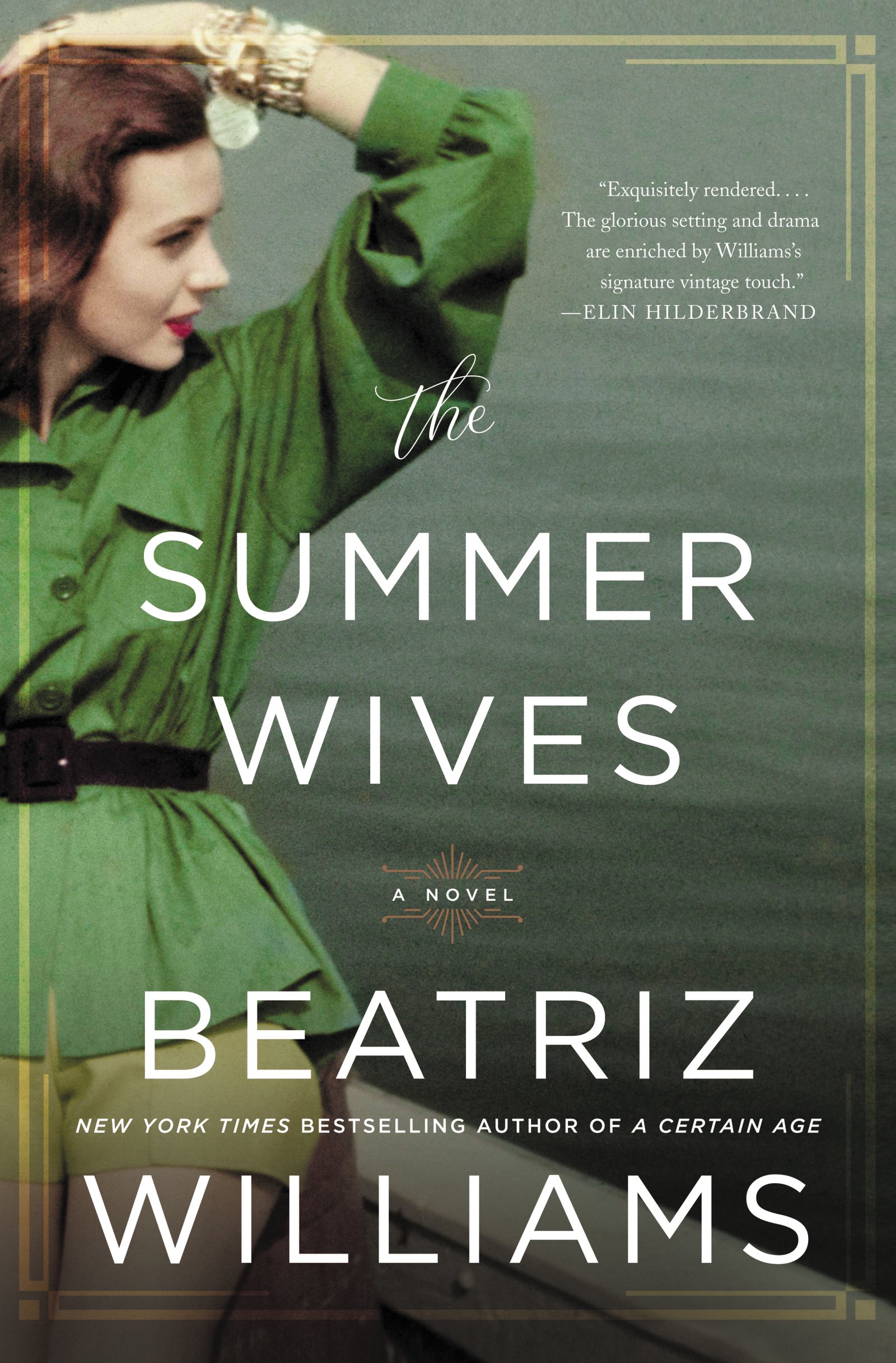
Book Review: The Summer Wives by Beatriz Williams

The Summer Wives by Beatriz Williams

I just Love. Beatriz. Williams. In my opinion, I could end this review there.

That being said, The Summer Wives was not my favorite of her novels – it is significantly less astounding. This, however, is not as much a criticism of the book as it is praise for the author. I truly feel taken in by each one of Williams’ novels – just some more than the others.

I think that I knew this one may be a little flat. The hardcover copy of the novel has sat on my bookshelf for nearly a year. Perhaps the mediocre reviews permeated my subconscious.

Still, I’m glad to have read it. Quick and vigilant, the story marches, like trained troops, towards its realization. The main character of Miranda Schuyler marches like a soldier through her own story, rather than taking the lead as General.

In comparison with other Williams heroines, Miranda was a bit feeble, and not particularly determined to own her story. That’s okay, there are all different types of characters, but I felt like Miranda rolled over and let life happen to her rather than living it.

The one thing she does for herself throughout the noel is to become an actress, and even this wasn’t her own dream, but the dream of her former lover for her. She doesn’t do a lot of thinking for herself, which troubled me.

Miranda’s mother is a complete waste of space. She never defends her daughter or acts in her best interest, choosing to wallow away in the shadow of her husband’s death – who was a di**.

Hugh Fisher is the example of all that is wrong with society, he is rich (or acts like it) and takes and takes from everyone around him, living like a parasite off the emotions of people he has deemed lesser, and who allow him to take advantage.

I am a huge proponent of flawed characters, but overall, there were too many, in roles that were too standard.

The romance, the picturesque setting, the lyrical prose – all magnificent. Williams truly has a way with sentence structure. I am really looking forward to her next novel, The Golden Hour, due out in July. I hope the next novel reflects all the true writing prowess Williams possesses to tell a story and to make the reader completely bereft at the thought that they can’t be a part of the story itself, upset every time they have to close the book. Williams has given me that feeling before, and I’m looking forward to it again.

books · Historical Fiction

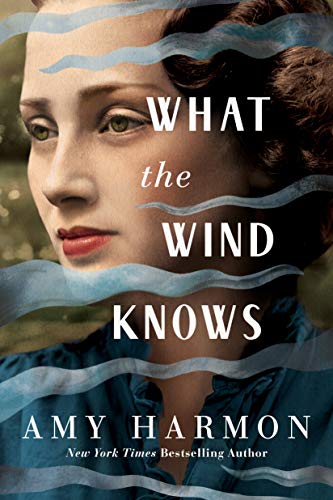
Review: What the Winds Know by Amy Harmon

What the Wind Knows
Anne Gallagher finds herself in 1912 Ireland in Amy Harmon’s new time travel romance.

No matter how hard I try, I just keep falling ass-backwards into time travel love stories. For the love of god, it needs to stop. Not only do they typically make very little sense (what modern woman is going to fall for a guy who she has to school on the greater challenges of feminism in recent decades) but I am trying to branch out in genre. Not doing great so far.

Regardless of that, I have to say that I really enjoyed Amy Harmon’s What the Wind Knows. Surrounding the 20th Century Irish rebellions and quest for freedom from Great Britain, this was offered as an Amazon First read book for prime users in March (any excuse for a St. Paddy’s Day promo).

“Was I changing history, or had I always been part of it?” The main character Anne asks herself this age old time travel question. This book answers the question and is worth reading, although I’m glad I didn’t pay for it.