books · Historical Fiction

Book Review: This Tender Land by William Kent Krueger

This Tender Land by William Kent Krueger.

This Tender Land by William Kent Krueger is a marvel of modern American fiction. I truly want to shout from the internet rooftops about the injustice of this book not getting enough attention. Set in 1932 Minnesota, a gang of young orphans, brothers Albert and Odie O’Banion, 6-year-old Emmy Frost and their mute Sioux friend Mose, run away from the Lincoln Indian Trading School, where displaced young Indians are held and schooled for their alleged betterment, having been driven off the reservations and separated from their families. Albert and Odie, the only two white boys, were orphaned while traveling with their father, and so ended up at the school.

The group is on the run. They’ve left disaster behind in their wake at the Lincoln School, and their need to stay away from the Headmistress Mrs. Brickman, whom they nickname the Black Witch, is paramount. The group sets off down the Gilead River, stopping for a number of misadventures along the way.

 The protagonist, Odie, grapples with his faith as the group continues their travels south to Saint Louis. Odie begins to say that “God a tornado,” because he feels that the only way God acts in his life is in the form of tragedy. As Odie travels, his belief in the Tornado God only worsens, as he often grapples with making decisions far beyond his years in the face of adversity.

As the title may suggest, This Tender Land is a coming of age story, not just for Odie and his fellow ‘Vagabonds’ as they call themselves, but for America. It is reminiscent of a time in our country’s youth, where, befouled by misdeeds and missteps, Great Depression-era America strangled the Midwest. It was a time where hurt accumulated in the hearts of Americans and fueled the distaste of a seemingly no-good government. An impressionable orphan, Odie learns quickly that there is a notable difference between those down on their luck due to the economy and those who seem to not be affected. He can’t understand how people could live lives of luxury knowing how the other half lives. His innocence is noble and refreshing.

Odie acts with compassion towards a number of people he meets on his journey, and though he feels cursed by bad luck and circumstance, he continues to act that way. He gives to those in need, and though he is rarely rewarded, he continues to do so. This devotion slowly becomes his faith, and the pillar on which he is able to find strength in forgiveness and to find his way home.

This Tender Land is well-written, transcending genres in a way I haven’t seen before. There are traces of thriller in the plot, in addition to nuances of the mystical variety. I read this in two days and I am sad to have to leave the characters within the book covers. If you’d like to feel a little inspiration while we all keep moving through difficult times, this story will buoy you towards solace and belief in healing.
books · Historical Fiction · Science/ Alternative Fiction

Book Review: The Underground Railroad by Colson Whitehead

The Underground Railroad by Colson Whitehead

The Underground Railroad by Colson Whitehead was a deviation from the norm in my reading list. Whitehead takes a solidified past event, and uses fictional elements to create a subversive retelling of pre-Civil War America. The fictionalization creates a dystopian past, where relevant modern-day issues are planted like weeds, showing how those issues and prejudices have thrived into the modern day.

Cora is a strong-willed self-preservationist. She lives on a plantation in Georgia, owned and operated by the Randall family, where her mother and grandmother were also slaves. Cora’s mother Mabel was a runaway slave, getting away from the plantation and never being caught. Cora is haunted by her mother’s decision to abandon her daughter, and by the fact that mother is likely living in the North, free from imprisonment and persecution.

Cora is convinced by a friend to run. They set off in the dead of night, making their way into South Carolina. There they find peace, a happy sanctuary, but it’s later discovered that far worse things are happening to free blacks there. Cora needs to continue to run, because there is a known slave hunter after her.

Each of the states she ends up in poses another threat to her freedom. In South Carolina, though the practices were radically better than Georgia, she finds that doctors are “persuading” young black women to be on birth control or forcing them to terminate pregnancies, showing that an underhanded abuse through sterilization is rampant.

After a close call with her pursuer, Cora ends up in North Carolina, where daily hangings in the town square are a source of entertainment. Cora can hear the clapping from her cell in an abolitionist’s attic. Juxtaposed with South Carolina, where blacks were largely free, or so it seemed, North Carolina appears completely outlandish.

This is the unique quality of the novel. By creating such different circumstances in each state, Whitehead is able to create a story where hangings and public displays of anti-slavery sentiment seem rash, when in reality, this was a rampant practice throughout the south during the pre-Civil War era. By fictionalizing certain elements of the novel, Whitehead turns our understanding of ‘acceptable’ upside down. As the book progresses, the reader is inclined to accept that South Carolina, with its own set of problems, was better. When in reality, none of the places Cora lands in are acceptable for her.

Whitehead created the novel around the idea that the Underground Railroad was just that, a true railroad. In reality, the Underground Railroad was a series of houses. Here, it is similar, although there are stations under houses, where escapees can follow to their next destination. I didn’t find that the railroad concept added much to the story, aside from muddying the waters of ‘then’ and ‘now’ further to show the reader how prevalent these sentiments are.

Overall, I thought the book was thought-provoking and different. It brought certain questions about antebellum America to the surface while stifling others. It also strayed from the typical slave-memoir format, and featured a protagonist who was fearful, but never cowed in the face of fear, which may seem unrealistic. Cora’s determination is palpable, and her journey is one worth following.

books · Mystery · Romance

Series Review: A Curious Beginning and A Perilous Undertaking by Deanna Raybourn

A Curious Beginning by Deanna Raybourn

The first two novels in the Veronica Speedwell mystery series have been highly entertaining. It’s been a while since I’ve been able to jump into a series that takes place in another time and still feel a connection to the characters.

Historical fiction is unique in that sense. It allows the reader insight into another time by allowing for comparison to be made to the present day without the necessity of direct parallels. On the surface, you would think that I would have little to relate to a 19th century orphan who turns out to be a closeted princess. But Veronica is one of the bluntest, sharpest, and most charismatic female protagonists, particularly of fiction more geared towards Young Adults. 

Veronica Speedwell has just buried her aunt when she comes home to a stranger burglarizing her home. It’s no matter for Veronica, who already had plans to leave the family home in search of new adventures, except for the arrival of a stranger whose motive is to help her. The Baron, as he comes to be known, is assured that Veronica is in danger, even though she is quite certain the robbery was random. 

He convinces her to travel with him to London. A young, unmarried woman, Veronica isn’t cawed by this proposition in the least. She decides to assuage this kind man’s fears and accompany him. After her arrival in London, the Baron delivers her into the watch of an old friend, Stoker. Veronica isn’t pleased at all to be passed from man to man, especially because she believes herself not to be in danger. But when the Baron is murdered, Veronica and Stoker team up to find out what happened to the Baron. 

I saw someone refer to the romance between Stoker and Veronica as a “slow burn” the other day, and boy, is it. Veronica is curt and doesn’t mince her words, telling Stoker her exact thoughts as she thinks them, whether they be inappropriate, worldly, or apt to make him blush. Stoker playfully banters with Veronica as well, but is wholly devoted to protecting her, no matter her insistence of not needing protection. Although the attraction is clearly there, their friendship is paramount, which is comforting to the reader. 

Stoker supports Veronica as she comes into new information about herself and is faced with her greatest challenge yet: entering the world of the royal family. 

As the second book unfolds, Veronica and Stoker, backdoor detectives, are hired to investigate the murder of a young female artist. Her lover and the father of her unborn baby is set to hang for the crime, so Stoker and Veronica are up against a ticking clock with limited resources. The police seem set on hanging their culprit, although shadowy forces in the background who hire Stoker and Veronica seem less convinced. 

This is probably the least plausible aspect of the novels: that two natural scientists (Stoker is a physician and taxidermist and Veronica is a lepidopterist: studier of butterflies) would be hired in any capacity to investigate a murder or stop a hanging. But that’s why it’s fun! 

The 19th Century British procedural meets the Jane Austen love story in this series. The protagonists are considered odd, but we know now that they were simply before their time. As such, these books are easy to absorb and the perfect distraction from the now, which is just what I’ve been looking for. Can’t wait to read more!

Mystery · Thriller

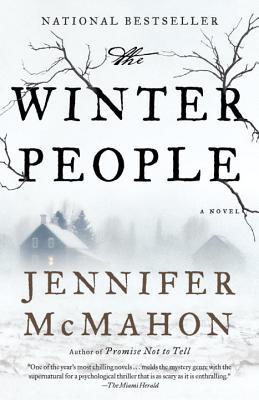
Book Review: The Winter People by Jennifer McMahon

The Winter People
The Winter People by Jennifer McMahon is an eerie mystery set in rural Vermont.

Happy New Year from the 2 Book Girls! It looks like we’ve taken an unplanned hiatus over the last few months, with holiday plans and travel getting in the way of sitting down and enjoying a good book! I have been listening to a few audiobooks, which are easy to tune in to on a plane or a train. Still, I found myself ravenous for a new book in some quiet moments around the New Year. The Winter People by Jennifer McMahon ended up being an enjoyable surprise.

Truth be told, I took the book on vacation because it was small and packable, never a bad reason! The story is written in two different time periods: 1908 and the present day. Following the story of a modern teenage girl living in rural Vermont, Ruthie, and a young new mother in the early 1900s, Sara, the novel adroitly switches back and forth in sequence.

Sara Harrison Shea is the subject of lore for the constituents of West Hall, Vermont. She was allegedly killed by her husband, Martin, after the tragic death of their young daughter, a family torn apart by grief. The house they lived in, in front of the famed landmark mountain outcropping the Devil’s Hand, is said to be haunted. That historic house is now inhabited by a family named the Washburne’s.

Ruthie Washburne comes back from a night out to find her mother gone, a cup of tea still on the table. She goes to sleep and awakes to her mother still missing, and her six-year-old sister asking where she is. Ruthie takes on all the responsibility of caring for her sister, while simultaneously trying to figure out where her mother has gone.

Ruthie and her sister, Fawn, discover hidden papers in the floorboards of the house in their search for clues about their mother, the diary of Sara Harrison Shea. The diary elucidates the tale of the death of Sara’s daughter Gertie, and her decision to bring her back from the dead. Sara knew the secrets of awakening the dead, or creating sleepers[rd1] , from her pseudo-adopted mother, an aboriginal woman who raised her as her own. Auntie’s tragic death is also documented in Sara’s writings.

As Ruthie starts asking questions in town, she finds that the lore of Sara Harrison Shea may be more than just lore. With finding her mother as her North Star, Ruthie meets some people who simultaneously help her understand where her mother may be, and throw her into a new line of fire.

Ruthie is a bold character, and I found her storyline very compelling. Her wholehearted interest in keeping her sister safe throughout the novel is juxtaposed by her typical teenage personality in the first few chapters. I found her growth in the face of adversity to be paramount to the novel’s realism. Although the subject of awaking the dead can often be steeped in tales of witchcraft, I found the basis of the novel was more historic, making the tale somewhat more believable.

The Winter People was thoroughly entertaining, and I will be picking up more work by Jennifer McMahon.


 [rd1]

Fantasy

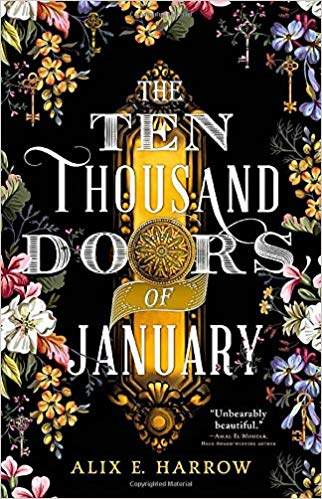
Book Review: The Ten Thousand Doors of January by Alix E. Harrow

To be honest, I found The Ten Thousand Doors of January to be a bit of a slog. Although well written, this coming-of-age narrative about a girl searching for her identity in the world fell flat. Interestingly enough, the whole premise of the book is that the world is not flat, but in fact, has many dimensions; doors (or Doors, using capitalization to illustrate their importance) that open thresholds to new worlds.

January Scaller is a young girl who has been adopted by a wealthy aristocrat. She is dark-skinned in the country of Vermont in the late 1800s, a time when the word “savage” is often used in normal conversation. Her presence in the well-to-do world of her guardian, Mr. Locke, is ever the source of contempt among his peers.

January’s father is an adventurist, employed by Mr. Locke to collect treasures around the world for Locke’s collections and auctions. January has always resented her father constant traveling, leaving her behind. She discovers a book called The Ten Thousand Doors that finally sheds some light on her father’s mysterious life.

At its core, this book is about one girl’s search for her identity, even when she is told to just “be a good girl” and count her blessings of good fortune. She seeks answers, and she finds them, through a series of misfortune and an overly trusting attitude. Her ultimate reward is finding direction and purpose in a world where she has consistently had none.

I was a little disappointed in the novel’s meandering. For a story that is based on the quest to find identity and purpose, it felt purposeless. January’s story almost feels like it is being set up for a series.

I wasn’t in love with the story, but I didn’t dislike it either. All around, a good debut from Alix E. Harrow.

Historical Fiction

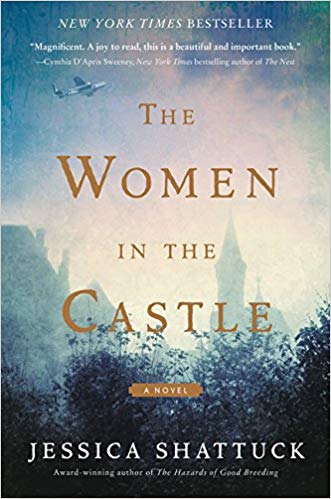
Book Review: The Women in the Castle by Jessica Shattuck

With so many WWII era historical fiction books on the market, The Women in the Castle has the potential to get overlooked. It’s been sitting on my shelf for a few months, but I finally took the time to read it. I’m glad that I did, because it gave me a thoroughly different perspective on the affected people of WWII, highlighting the lives of German women that also had to live with the fallout of being members of a defeated country.

As Germany is attempting to rebuild, three women come to live together at an old castle in Ehrenheim, Germany. Marianne Von Lingenfels, who the castle now belongs to, has vowed to take in the wives of her dead husband’s peers – widowed women whose husbands may have also been resisters of Hitler and now have nowhere else to turn. Benita Fledermann, the wife of Marianne’s good friend Connie Fledermann, comes to live with her along with her son Martin. Later, Ania Graberek also finds solace at the castle with her two sons.

There was a quote that stood out to me about halfway through the novel. “But what are people without their faces? How could you know a man if you can’t see his face?” (198). Marianne asks this of Ania. Marianne is very straightforward, and she believes the world to be black and white – you are either a Nazi supporter or you are not, you are a resister, or you are complicit, you are strong or you are weak. There is no gray area. The reader finds out quickly that Ania and Benita live their lives far more in the gray area, and it is quite possible that they have secrets hiding behind different faces.

The women form a bond through co-parenting, navigating small rations, displaced soldiers who intimidate them on their own land, and their own personal post-war troubles. Benita is a softer woman, easily manipulated. Her demeanor troubles Marianne, who is so adamant about right and wrong. Benita is just seeking solace after the war – she finds love with an ex-Nazi, and Marianne is completely against the arrangement. But Benita asks, “Don’t you want to forget?” She doesn’t want to think about the past any longer, while it seems that Marianne holds on to the past like an anchor, weighing her down.

Ania has her own demons that resurface after the war as well. Finding out her past transgressions, Marianne is judgmental and harsh, again assuming that all situations are dichotomous.

The storyline was riveting, and the characters were staunch. I felt that Benita’s character could have evolved more. I wanted a better ending for her.

The Women in the Castle discusses difficult topics, including the subject of Hitler’s luster as a leader. There is an understanding in the novel that not all of Hitler’s propaganda and shiny promises that enraptured Germany from the beginning came with a heavy hand and clear-cut genocide, but were concealed within promises of a better, more wholesome, self-sufficient country, promises that ordinary people were excited to believe in, hoping for better for their families. There are sides to every story, and this novel forces us to digest that, even if we may not want to remember the uglier sides.

books · Romance

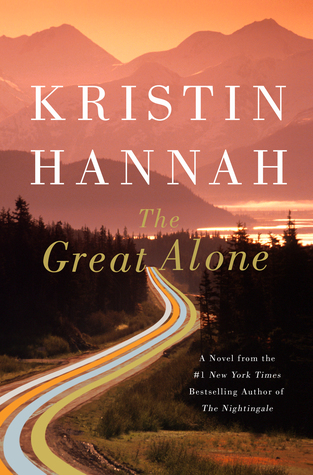
Book Review: The Great Alone by Kristin Hannah

The Great Alone

Having just finished The Great Alone by Kristin Hannah, I am still trying to dissect my feelings on the novel. Currently, I feel…unsettled.

A coming of age novel about a young girl in the 1970s, Leni Allbright is the daughter of a Vietnam War POW, Ernt Allbright, and his wife Cora. Ernt has just returned home to his wife and daughter, but he’s not the same man who left. The war has transformed Ernt, and not for the better. He is out of money and out of options, having been fired from numerous mechanic jobs.

Ernt has decided to move his family to Alaska, to a small peninsula where a fellow Vietnam soldier has left him a plot of land. Big dreams about the unknown formulate as the Allbright family considers how Alaska could be the answer to their prolonged search for happiness.

While summer in Alaska brings days of unending sunlight and the promise of freedom, the Alaskan winter quickly sets in to foil any hope the Allbrights had for that happiness. Ernt’s moods are unpredictable with the winter weather, and the family is unprepared for harsh Alaskan weather.

Banding together to help the Allbrights prepare, even as Ernt protests outside help, the Kaneq community proves to be a steadying force in Leni’s life. Made up of a motley crew of native Alaskans and those newer to Alaska, the community dynamic was one of my favorite parts of the novel. There’s an understanding of true kindness and goodness that permeates the personal boundaries between neighbors. Alaska may be The Great Alone in many ways, but there is always a helping hand for Leni and Cora when they need it. Their problem is learning how to accept help.

Leni thrives in the wilderness. Ernt teaches his wife and daughter to prepare for the end of the world, which is helpful in the Alaskan wilderness, but it doesn’t protect them from him. Ernt’s dark moods are sudden and he has an insistence that “holier-than-thou” men are trying to destroy Kaneq with money and materialism. Nothing will stop him fom aggressively beating his wife.

Truly, this book gave me a lot of anxiety. Cora and Leni live in a world of fear, constantly afraid of what will set Ernt off and end in bruises for Cora. I was bothered not only by the situation, but by Cora’s insistence that her husband “didn’t mean it” and Leni’s insistence in taking care of her mother. While reading, I just wanted one of them to get. the. hell. out. of. there. They referred to each other as peas in a pod and boy did they mean it. Traditional parent/child roles were switched, and I felt the pain of responsibility on Leni’s shoulders.

Kristin Hannah’s luxurious language and portrait of the Alaskan wilderness is something else, but I was hesitant to enjoy it because of my persistent anxiety over Cora and Leni’s situation. As the reader, you knew that Ernt’s behavior was escalating and was going to climax in possible fatal violence, and because of that, the pretty words about open Alaskan country couldn’t distract me.

Leni falls in love with Matthew Walker, the only other boy her age in school. Their love is young and innocent, but Matthew happens to be the son of Ernt’s largest town rival, sealing Leni and Matthew’s fate as star-crossed lovers. As Ernt falls further and further into delusion about the terrors of the outside world, he builds a wall to keep the world out of their homestead, but in turn, Cora and Leni are trapped. Leni and Cora are forced to leave, and Leni is forced to leave behind everything she cares about in Alaska.

Some of the plot points were unrealistic, but I really did enjoy Leni and Matthew’s relationship, particularly his willingness to help her no matter what the cost.

Ernt and Cora were troubling characters- but they were one of the more realistic parts of the story. Toxic, abusive relationships are sadly very common, and I felt Cora was a true representation of a battered woman. Her flaws were heartbreaking and dangerous.

Leni was set up for failure from the start, but against the Alaskan backdrop, she becomes a resilient force to be reckoned with. She excels in the ways her mother failed. She changes the story. Although this novel filled me with a dread I have rarely felt while reading modern fiction, I enjoyed the story. The story ended with less death than I expected, but one quote from the beginning of the novel caught my eye. As a child, Leni understood death as it was described through books – “a message, catharsis, retribution.” Hannah writes “Death made you cry, filled you with sadness, but in the best of her books, there was peace, too, satisfaction, a sense of the story ending as it should.” The Great Alone provided this satisfaction – a story ending as it should.

books · Historical Fiction

Book Review: The Island of Sea Women by Lisa See

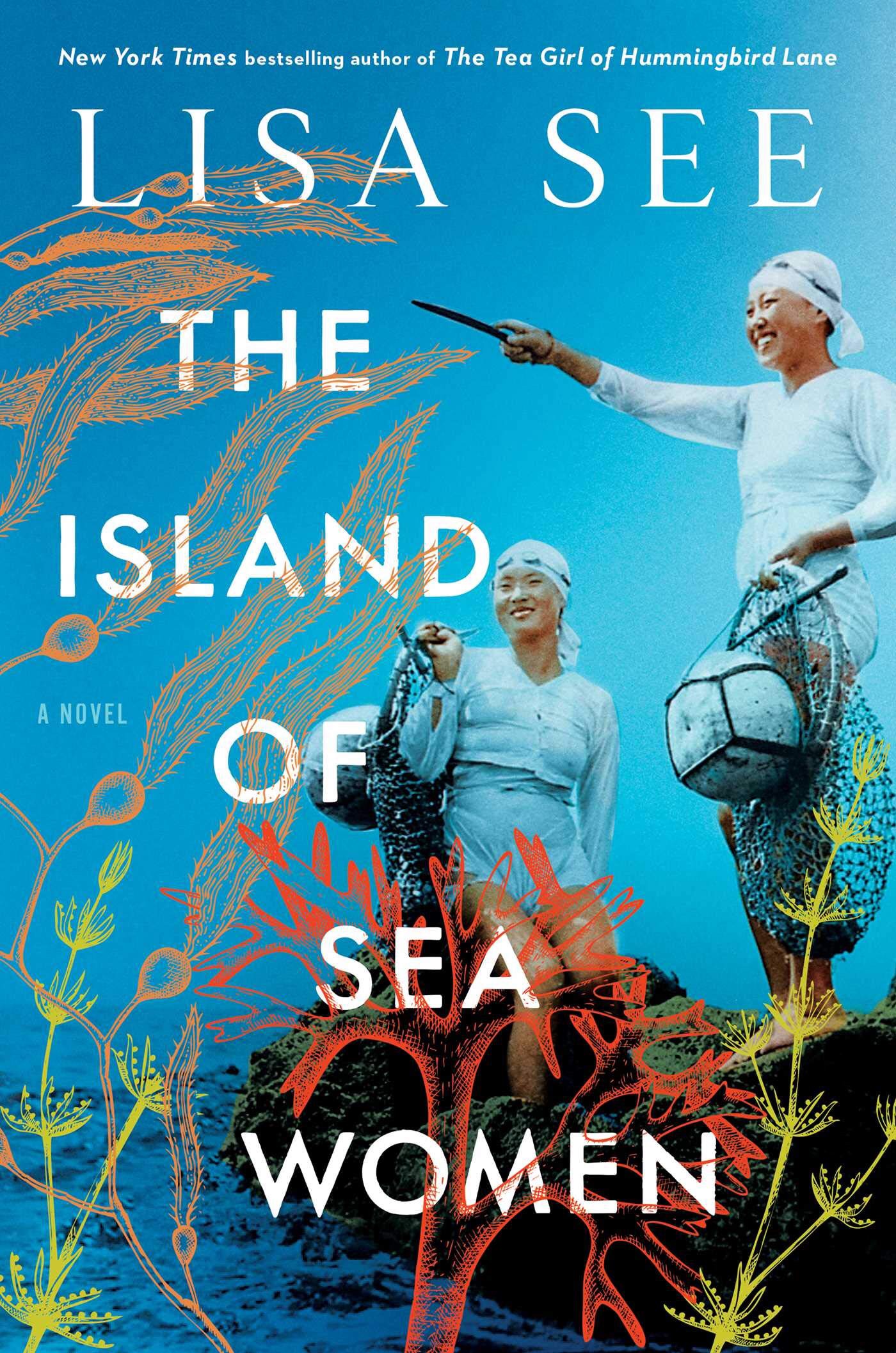
Sometimes, you should judge a book by its cover. This was my favorite book of 2019, and I based my purchase almost entirely on the interesting cover with two old ladies. As I brought the book home, it was a serious underdog, being beat out book after book with others I’d bought and borrowed. Finally, I picked this up last week after buying it at the Tattered Cover Bookstore on vacation in Denver in May. I was not disappointed.
The number of Asian-American coming-of-age books the New York State curriculum force-fed me and my peers in middle and high school (I’m looking at you Joy Luck Club and Memoirs of a Geisha) has conditioned me to avoid Asian literature. I never enjoyed anything that we were told to read. It wasn’t relatable to me and I wrote it off. With the recent resurgence of all different types of multi-cultural fiction, I’ve been trying to diversify the stories I read to incorporate some stuff that might not be the most relatable for me, but is still very worthwhile.

The Island of Sea Women spans pre- World War II and wartime Korea, detailing Korean occupation by the Japanese and by the Allies. Japanese occupation of Korea began in 1910. This story begins with a distinct air of unrest with the Japanese- although there isn’t outright war, the Korean natives stay as far from Japanese insurgents and soldiers as they can.

The body of the story follows two female friends and their journey through life as haenyeo. Haenyeo are female divers who reside on the Korean island of Jeju, where a family living is made primarily by the female mother, who dives into the sea to collect food (primarily seaweed, clams and abalone, but sometimes octopus and larger finds) and other sea life to sell for income. The haenyeo collective is a matriarchal society, one that stands juxtaposed to the male dominated societies of the West, particularly in the 1940s.

First and foremost, I am grateful for having read this book because of what it taught me about Korean history. My grandfather was in the Korean War and I am ashamed to admit I knew close to nothing about the United States’ role in the emancipation of South Korea from Japan and North Korea, never mind anything about Korea itself.

Even better, the story of female friendship between Young-sook and Mi-ja. Mi-ja’s family were Japanese “collaborators” – a term thrown around pretty loosely. Her father worked in a Japanese factory on the Korean mainland. Orphaned at a young age after moving to the island of Jeju with her father, Mi-ja is taken under the wing of Young-sook’s mother, who is the chief of the village diving collective. She teachers the young girls to dive as haenyeo, to provide for their families as true Island women do.

Young-sook and Mi-ja’s lives deviate amidst a backdrop of world war. Mi-ja is arranged to marry a man from a Japanese collaborating family. Her similarities to Young-sook dwindle and Young-sook finds it harder and harder to maintain her sisterhood with Mi-ja.

War strikes the island, bringing tragedy to Young-sook’s family. Her losses are symbolic to her of Mi-ja’s insistence on not helping Young-sook’s family in their time of need. Surely her husband’s political ties could save them all? Her relationship with Mi-ja is never the same.

Haenyeo are known for fortitude, determination and strong will. Young-sook embodies these without apology. It is seen as a benefit for haenyeo to be this way, to endure in the face of adversity, but I think this contributes to Young-sook’s loss of oversight and her inability (or direct negligence) to sympathize with her friend.

There are secrets between Mi-ja and Young-sook that enable them to never understand each other. There is death between them before they can heal their wounds. If Young-sook has been willing and able to embrace her friend in her own lowest time with sympathy rather than judgement, she would have come to easier realizations. Instead she harbors resentments, using her strength of character to put up an impenetrable wall against her friend.

The things lost between them are devastating. In a time when there is infinite loss and terror, two friends are driven further into turmoil, against each other, following societal lines of demarcation.

Lisa See’s novel details the lives of strong, immovable women, women I found to be extremely worthy, laudable, and noble. She highlights, however, how even the most noble can be flawed and can be inhibited from making the best choices as humans, even if they believe they are following an understanding of what’s right.

See’s writing is so enjoyable- like a refreshing dip in the ocean. May we learn from the haenyeo and from these characters something about grit, perseverance, and empathy.

books · Science/ Alternative Fiction

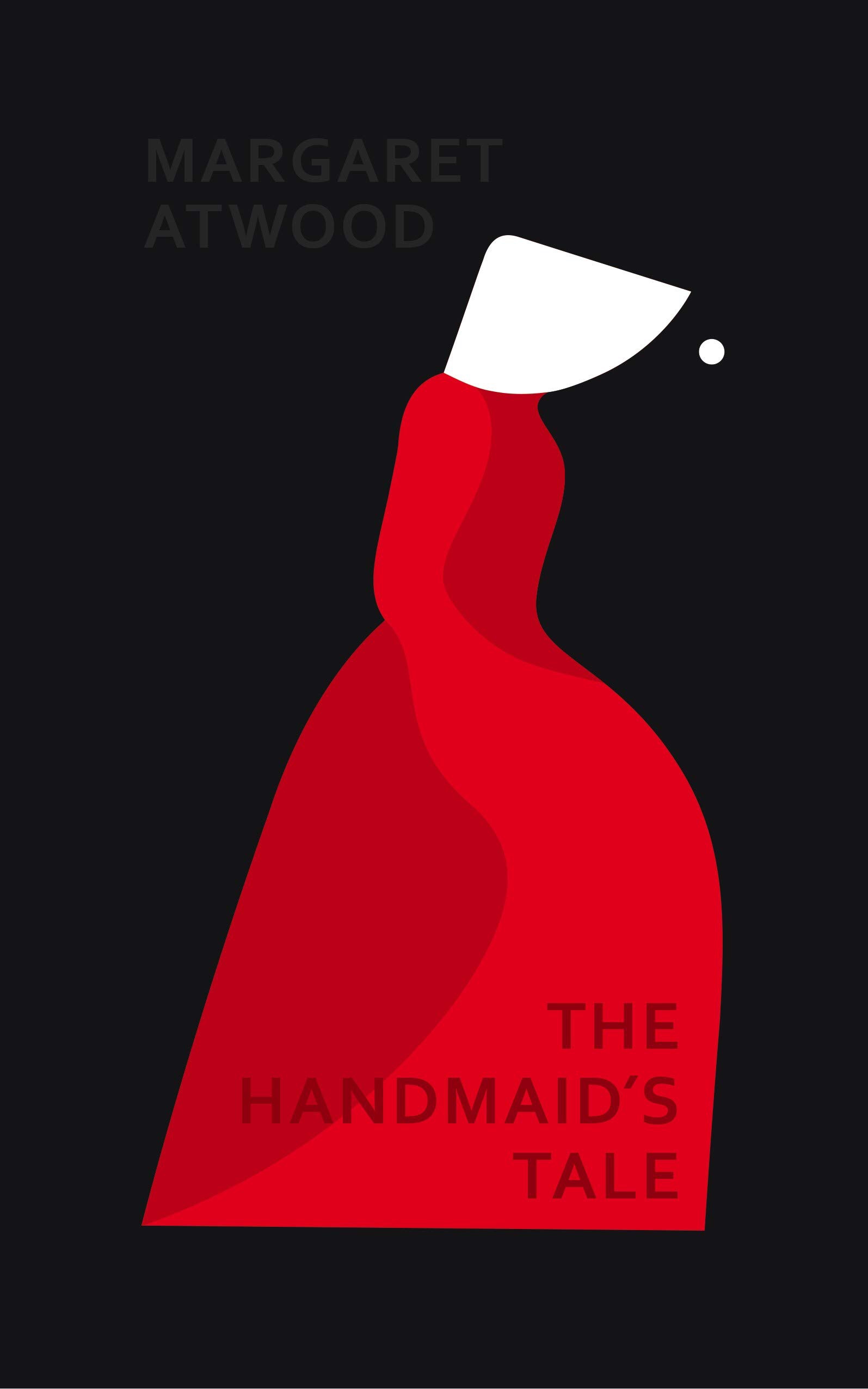
Book Review: The Handmaid’s Tale by Margaret Atwood

There has been a lot of hype around The Handmaid’s Tale lately, particularly in the relativity of this story to modern society and female rights.
My train of contemplation throughout this novel strayed towards human nature: the lack of it, the necessity for it, the justification of it in any and all human societies. What we learn in this novel is that no matter what confines or liberties are put forth to a group of people, or on one person, there is always the uncontrollable element of desire and the inclination towards what is deemed natural.

Nature versus nurture is a long-debated paradox in psychology, but if there was ever a definitive justification for the dominance of nature, it is The Handmaid’s Tale.

Offred is living in the dystopian country of Gilead, where women like her serve one purpose – to reproduce for the family to which they are assigned. Children they bear are not their own, they belong to the “wives” for which they serve.

The society is dominated by archaic rules that condemn women to a life without reading or writing, learning or socializing. Relations between men and women are strictly sexual in scheduled encounters. Though these rules are stringent and the consequences are dire, each character in the novel gives in to their natural desires at some point throughout, giving credence to the idea that although culture can change, human autonomy withstands tests of its strength.

Left wanting more from this novel, I’m looking forward to the sequel that is set to be released in September 2019. I believe that the reasons I’m intrigued, however, resonate with the same inclination towards understanding human nature that the novel surrounds. I have the urge to fit the pieces together and find out how the resolution of conflict plays out in the characters’ lives, rather than a need to understand the potential political upheaval that Atwood creates which could, in our reality, so similarly affect even the most secure of societies.

My interest lies in the humanity- the relationships. Is Offred pregnant? Was her Commander really such a bad guy, or was he primarily good, but drunk with power and circumstance? Does Moira rest on her laurels or continue to fight?

I raced through this book with the constant desire to reach some understanding, I’m not sure of what. I don’t think resolution is really meant to be achieved. This book is not written to make you feel good or resolve fears, but to create them. There is no validation that humanity will will out over any adversity it is faced with. Coming to the close of the story and finding no answers to the great questions of our nature, I moved on, feeling a little deflated and wary of our potential as individuals and as societal beings.

Really interesting and makes me want to have a stern talk with my fiancé about my post-apocalyptic rights.

books · Thriller

Book Review: In a Dark, Dark Wood by Ruth Ware

In a Dark, Dark Wood by Ruth WareIn a Dark, Dark Wood by Ruth Ware was recommended to me a few years ago, and I just got around to reading it. As psychological thrillers go, it was solid. The plot was original- but something just fell flat for me.

Leonora is a 20-something living in London who has just been invited by an old school friend to attend a hen party (i.e. bachelorette for American folk). She’s confused by the invitation, as she hasn’t talked to Clare, the bride, in years. In the interest of being social and showing up for an old friend, Nora agrees to attend. What ensues is not your typical bachelorette party fun, but sinister.

I did not buy the plot of this novel, personally. If I went to a bachelorette party, and people I knew were acting shady and downright conniving, I would immediately be on the offensive. Nora is drawn further into herself, doubting her senses and making it easy for her to be taken advantage of.

All of Nora’s issues seem to stem from Clare- her treatment of Nora years ago, and secrets that will come out in the wash. This is a fun story, regardless of believability.