Modern FIction

Book Review: Little Fires Everywhere by Celeste Ng

Little Fires Everywhere, besides being a powerful story and commentary on suburban America, is a novel that transcends genre. As I have pondered how to classify this novel, I’ve realized that there is no one classification – it has no bounds.

Set in a suburb of Cleveland, the planned community of Shaker Heights, the story surrounds the Richardson family – Mr. and Mrs. Richardson, Lexie, Moody, Trip, and Izzy and is paralleled by the story of their rental tenants, Mia and Pearl Warren.

Shaker Heights, despite its name, does not get shook often. “Outside in the world, volcanoes erupted, governments rose and collapsed and bartered for hostages, rockets exploded, walls fell. But in Shaker Heights, things were peaceful, and riots and bombs and earthquakes were quiet thumps, muffled by distance.”

Mia and Pearl Warren are transients. Mia, an artist, moves around in search of inspiration for her work. Pearl, her timid but pedantic daughter, follows suit. Mia has promised Pearl that their move to Shaker Heights will be permanent, having spent many years traveling, uprooting and moving on.

Befriended by Moody, Pearl becomes ingrained in the day-to-day lives of the Richardson family. She is best friends with Moody, admires and esteems their oldest teenage daughter Lexie, and falls in teenage lust with their jock son, Trip.

Pearl, having never been close with anyone her age before, is enamored with the Richardsons, and even occasionally pictures herself as Mrs. Richardson’s daughter – how different her life would be. Not better or worse, but different.

Elena Richardson, used to the order of things in her household and getting what she wants, is upended by Mia’s arrival. This woman, who has skirted the normalcies of American life, who has defied the boundaries of family and order to traipse around the country, brings an element of disorder that Elena is unfamiliar with, foreign to her. She looks down on Mia’s nomadic lifestyle, but her turned nose is a sign of jealousy – what could Elena have been if she had refused to conform?

The primary conflicts of the novel come from a place of human error – ignorance, negligence, and unprompted interference. In short, everyone is in everyone else’s business all the time!

Elena Richardson sees the world in black and white. Her husband notes this in the novel – “One had followed the rules, and one had not. But the problem with rules, was that they implied a right way and a wrong way to do things. When, in fact, most of the time there were simply ways, none of them quite wrong or quite right, and nothing to tell you for sure  she embraces it, and exposes the Richardson children to the “gray” way of things – the middle between right and wrong, where she has found passion in her life. Mia is the light and example of alternate living, and the Richardson kids, particularly troublemaking, unconventional Izzy, are drawn to her flame.

I was “meh” about the way certain relationships ended in the story. I was also not in agreement with some of the decisions characters made – they made me mad, even while making me question morality. In the end, Elena Richardson subverts the Warrens’ place in Shaker Heights, using manipulation to force them to admit truths Mia has been running from. Pearl, in her ever-evolving dedication to her mother, sticks by her as she learns all the truths she never asked about. Her opinion of her mother doesn’t change.

Although the story may not have had a typical “happy ending” for Pearl and Mia, they persevere – and that ending is fitting. No matter who tries to sabotage them, and despite Mrs. Richardson’s best efforts, their dedication to each other, and to a life well lived, forges on. Mia repeats this often in times of stress and crisis throughout the book – “she’s going to be fine.” She has an unwavering ability to persevere, and she brings that forth as a talisman throughout the novel.
Historical Fiction

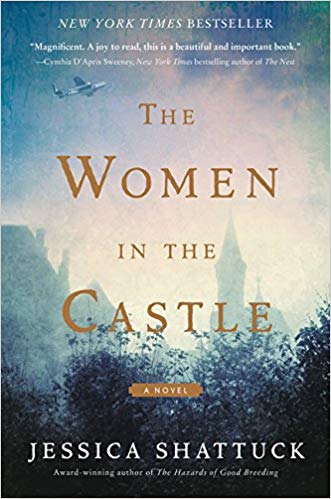
Book Review: The Women in the Castle by Jessica Shattuck

With so many WWII era historical fiction books on the market, The Women in the Castle has the potential to get overlooked. It’s been sitting on my shelf for a few months, but I finally took the time to read it. I’m glad that I did, because it gave me a thoroughly different perspective on the affected people of WWII, highlighting the lives of German women that also had to live with the fallout of being members of a defeated country.

As Germany is attempting to rebuild, three women come to live together at an old castle in Ehrenheim, Germany. Marianne Von Lingenfels, who the castle now belongs to, has vowed to take in the wives of her dead husband’s peers – widowed women whose husbands may have also been resisters of Hitler and now have nowhere else to turn. Benita Fledermann, the wife of Marianne’s good friend Connie Fledermann, comes to live with her along with her son Martin. Later, Ania Graberek also finds solace at the castle with her two sons.

There was a quote that stood out to me about halfway through the novel. “But what are people without their faces? How could you know a man if you can’t see his face?” (198). Marianne asks this of Ania. Marianne is very straightforward, and she believes the world to be black and white – you are either a Nazi supporter or you are not, you are a resister, or you are complicit, you are strong or you are weak. There is no gray area. The reader finds out quickly that Ania and Benita live their lives far more in the gray area, and it is quite possible that they have secrets hiding behind different faces.

The women form a bond through co-parenting, navigating small rations, displaced soldiers who intimidate them on their own land, and their own personal post-war troubles. Benita is a softer woman, easily manipulated. Her demeanor troubles Marianne, who is so adamant about right and wrong. Benita is just seeking solace after the war – she finds love with an ex-Nazi, and Marianne is completely against the arrangement. But Benita asks, “Don’t you want to forget?” She doesn’t want to think about the past any longer, while it seems that Marianne holds on to the past like an anchor, weighing her down.

Ania has her own demons that resurface after the war as well. Finding out her past transgressions, Marianne is judgmental and harsh, again assuming that all situations are dichotomous.

The storyline was riveting, and the characters were staunch. I felt that Benita’s character could have evolved more. I wanted a better ending for her.

The Women in the Castle discusses difficult topics, including the subject of Hitler’s luster as a leader. There is an understanding in the novel that not all of Hitler’s propaganda and shiny promises that enraptured Germany from the beginning came with a heavy hand and clear-cut genocide, but were concealed within promises of a better, more wholesome, self-sufficient country, promises that ordinary people were excited to believe in, hoping for better for their families. There are sides to every story, and this novel forces us to digest that, even if we may not want to remember the uglier sides.

Historical Fiction · Romance

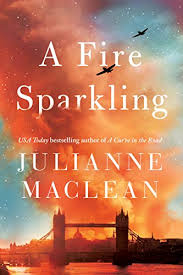
Book Review: A Fire Sparkling by Julianne MacLean

I acquired A Fire Sparkling as an Amazon First Reads book on my Kindle, free with my Amazon prime membership. I never get overly excited about free books, as I feel the stories are usually not that great. A Fire Sparkling was surprisingly charming, intelligent, and heartwarming.

April and Vivian Hughes are identical twins who reunite as World War II picks up speed. Vivian is the wife of a Cabinet Ministry member, and April has just returned from Germany, where she had been involved with a German officer. Sure of his merits as a standup man, regardless of his fighting for the Nazi party, April is convinced that once the war is over, she will be reunited with Ludwig and he will have denounced Germany and Hitler, only having been involved because of his German roots.

Vivian meets a sad fate, and her dying wish is that April will assume her identity. Pregnant with Nazi Ludwig’s child, April is sure to be sent to an internment camp if they figure out her involvement with a German. April grants Vivian’s dying wish and is blessed to live out most of the war without consequence.

Her ability to speak perfect French brings her face first with an opportunity to go undercover as a spy in France at the height of the war, and all secrets are threatened with exposure. April is asked, “You will be living a lie, you must lose yourself completely in another identity. Do you think you will be able to do that?” Her response: ‘Yes,’ I replied with absolute confidence. ‘I know I can.’

I typically don’t enjoy any story that relies on the use of identical twins. It seems like a bit of a lazy way to craft conflict. MacLean is able, however, to create great distinction between April and Vivian. They are two very different characters, and they both have their stories told.

A Fire Sparkling kept me guessing until the end, and had some great modern romance mixed in as well. I thoroughly enjoyed all of the intertwined story-lines and would be quick to read another Julianne MacLean novel in the future.

books · Romance

Book Review: The Great Alone by Kristin Hannah

The Great Alone

Having just finished The Great Alone by Kristin Hannah, I am still trying to dissect my feelings on the novel. Currently, I feel…unsettled.

A coming of age novel about a young girl in the 1970s, Leni Allbright is the daughter of a Vietnam War POW, Ernt Allbright, and his wife Cora. Ernt has just returned home to his wife and daughter, but he’s not the same man who left. The war has transformed Ernt, and not for the better. He is out of money and out of options, having been fired from numerous mechanic jobs.

Ernt has decided to move his family to Alaska, to a small peninsula where a fellow Vietnam soldier has left him a plot of land. Big dreams about the unknown formulate as the Allbright family considers how Alaska could be the answer to their prolonged search for happiness.

While summer in Alaska brings days of unending sunlight and the promise of freedom, the Alaskan winter quickly sets in to foil any hope the Allbrights had for that happiness. Ernt’s moods are unpredictable with the winter weather, and the family is unprepared for harsh Alaskan weather.

Banding together to help the Allbrights prepare, even as Ernt protests outside help, the Kaneq community proves to be a steadying force in Leni’s life. Made up of a motley crew of native Alaskans and those newer to Alaska, the community dynamic was one of my favorite parts of the novel. There’s an understanding of true kindness and goodness that permeates the personal boundaries between neighbors. Alaska may be The Great Alone in many ways, but there is always a helping hand for Leni and Cora when they need it. Their problem is learning how to accept help.

Leni thrives in the wilderness. Ernt teaches his wife and daughter to prepare for the end of the world, which is helpful in the Alaskan wilderness, but it doesn’t protect them from him. Ernt’s dark moods are sudden and he has an insistence that “holier-than-thou” men are trying to destroy Kaneq with money and materialism. Nothing will stop him fom aggressively beating his wife.

Truly, this book gave me a lot of anxiety. Cora and Leni live in a world of fear, constantly afraid of what will set Ernt off and end in bruises for Cora. I was bothered not only by the situation, but by Cora’s insistence that her husband “didn’t mean it” and Leni’s insistence in taking care of her mother. While reading, I just wanted one of them to get. the. hell. out. of. there. They referred to each other as peas in a pod and boy did they mean it. Traditional parent/child roles were switched, and I felt the pain of responsibility on Leni’s shoulders.

Kristin Hannah’s luxurious language and portrait of the Alaskan wilderness is something else, but I was hesitant to enjoy it because of my persistent anxiety over Cora and Leni’s situation. As the reader, you knew that Ernt’s behavior was escalating and was going to climax in possible fatal violence, and because of that, the pretty words about open Alaskan country couldn’t distract me.

Leni falls in love with Matthew Walker, the only other boy her age in school. Their love is young and innocent, but Matthew happens to be the son of Ernt’s largest town rival, sealing Leni and Matthew’s fate as star-crossed lovers. As Ernt falls further and further into delusion about the terrors of the outside world, he builds a wall to keep the world out of their homestead, but in turn, Cora and Leni are trapped. Leni and Cora are forced to leave, and Leni is forced to leave behind everything she cares about in Alaska.

Some of the plot points were unrealistic, but I really did enjoy Leni and Matthew’s relationship, particularly his willingness to help her no matter what the cost.

Ernt and Cora were troubling characters- but they were one of the more realistic parts of the story. Toxic, abusive relationships are sadly very common, and I felt Cora was a true representation of a battered woman. Her flaws were heartbreaking and dangerous.

Leni was set up for failure from the start, but against the Alaskan backdrop, she becomes a resilient force to be reckoned with. She excels in the ways her mother failed. She changes the story. Although this novel filled me with a dread I have rarely felt while reading modern fiction, I enjoyed the story. The story ended with less death than I expected, but one quote from the beginning of the novel caught my eye. As a child, Leni understood death as it was described through books – “a message, catharsis, retribution.” Hannah writes “Death made you cry, filled you with sadness, but in the best of her books, there was peace, too, satisfaction, a sense of the story ending as it should.” The Great Alone provided this satisfaction – a story ending as it should.

books

Book Review: There There by Tommy Orange

Image result for there there tommy orange review

The discovery of the “New World” was a blessing to those escaping religious persecution in Europe. The colonists found a place to be free, to start fresh and a whole lot of land to make that all possible. A little kink in their plan was the fact that this world was already home to indigenous peoples who had been living off the land for years. Since then Native Americans have been slaughtered, ripped from their homes, and forced onto designated land now called reservations. The modern day Native American stereotype is not a pretty one- most of the time the reservations are associated with alcoholism, gambling addiction and diabetes.

Once a people of health and freedom, Native Americans for the most part are now part of a low socioeconomic class plagued with a sense of not belonging.  Tommy Orange portrays the struggle of the “Urban Indians” in his novel There There. He writes, “We are the memories we don’t remember, which live in us, which we feel, which make us sing and dance and pray the way we do, feelings from memories that flare and bloom unexpectedly in our lives like blood through a blanket from a wound made by a bullet fired by a man shooting us in the back for our hair, for our heads, for a bounty, or just to get rid of us.” This sets the tone of the novel in which Orange tells the story of twelve characters, varying in their degree of Indian, as they plan to attend a big powwow in Oakland, California. As the characters develop we learn of their connections but the major similarity between them is the fact that they all struggle with being Native American in today’s America. Depression, alcoholism, domestic abuse, gang violence, teenage pregnancies, suicide are all realities for these individuals and their journey to find where and how they fit in ends at the Big Oakland Powwow.

Harvey, the MC travelling to the powwow says, “We all been through a lot we don’t understand in a world made to either break us or make us so hard we can’t break even when it’s what we need to do.” He is a recovering alcoholic who runs AA meetings for fellow urban Native Americans.  He is travelling to the powwow with a woman who he forced himself upon earlier in life and also plans to meet a son that he has never met at the powwow. This is an example of how interconnected Orange’s characters are in the novel. They are all on a path of self discovery which unfortunately coincides with self destruction.

I thoroughly enjoyed reading There There because of the raw emotion that Orange is able to portray in his words. He paints a very clear picture of the struggle Native Americans face today in this country which is a topic that rarely gets the recognition it deserves. This is not the story told in school history books but a very real and very current slow destruction of a group of people that is eerily reminiscent of the past. It is well worth a read.

books · Thriller

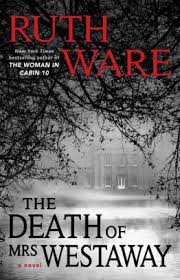
Book Review: The Death of Mrs. Westaway

Ah summer- the perfect time to curl up on the couch in the AC during a thunder boomer and read! I was excited to start my most recent read as there was a lot of hype surrounding Ruth Ware’s The Death of Mrs. Westaway. I read The Woman in Cabin 10 last year and found it initially enticing but it ended up falling a little flat for me. Although my hopes were high, I have to say the same about this one.

Hal is our protagonist in this thriller. She is a tarot card reader in her early 20’s reeling from the recent and sudden death of her mother. She is struggling to pay the bills and even owes scary loan sharks money. In a twist of fate she is unexpectedly contacted by a solicitor (English verbiage for lawyer)  who notifies Hal that she has been named in the will of a Mrs. Westaway whom has recently passed away. She knows nothing about her mother’s family and did not know her father, however she is doubtful that this correspondence is rightfully meant for her. Seeing as she has nothing to lose, she decides to go to the estate of Mrs. Westaway, called Trepassan, to claim her prize.  She believes that she can use the people -reading skills and intuition that she uses daily to make a living to convince this family that she is Mrs. Westaway’s long lost granddaughter and hopefully get some money out of it. Little does she know that Trepassan holds many dark and twisted secrets and that the family she is about to meet may not be one she wants to keep.

The novel has a dreary almost Gothic vibe and is set in rainy, cold England which is the perfect setting for a murder mystery. As I was reading I felt as if I was on the Clue game board; It was the Colonel with the knife in the kitchen! As with most mysteries I did successfully guess “who dun it” and was not overly satisfied with the outcome. I do enjoy Ruth’s detailed writing style and her character development. Overall even though it held my attention I would say to skip this one. Hoping her newest thriller, The Turn of the Key has a little more oomph to it!

books · Historical Fiction

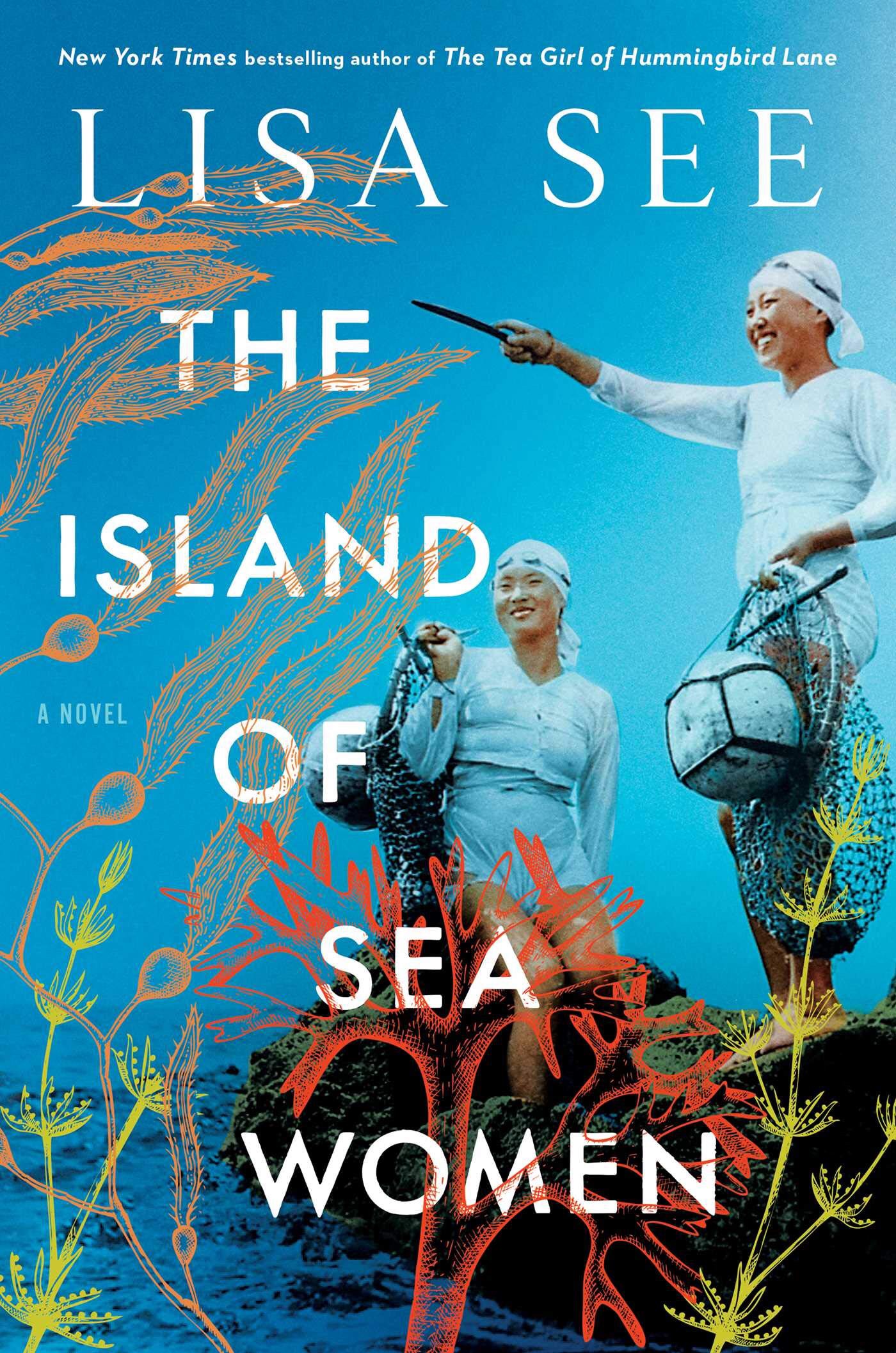
Book Review: The Island of Sea Women by Lisa See

Sometimes, you should judge a book by its cover. This was my favorite book of 2019, and I based my purchase almost entirely on the interesting cover with two old ladies. As I brought the book home, it was a serious underdog, being beat out book after book with others I’d bought and borrowed. Finally, I picked this up last week after buying it at the Tattered Cover Bookstore on vacation in Denver in May. I was not disappointed.
The number of Asian-American coming-of-age books the New York State curriculum force-fed me and my peers in middle and high school (I’m looking at you Joy Luck Club and Memoirs of a Geisha) has conditioned me to avoid Asian literature. I never enjoyed anything that we were told to read. It wasn’t relatable to me and I wrote it off. With the recent resurgence of all different types of multi-cultural fiction, I’ve been trying to diversify the stories I read to incorporate some stuff that might not be the most relatable for me, but is still very worthwhile.

The Island of Sea Women spans pre- World War II and wartime Korea, detailing Korean occupation by the Japanese and by the Allies. Japanese occupation of Korea began in 1910. This story begins with a distinct air of unrest with the Japanese- although there isn’t outright war, the Korean natives stay as far from Japanese insurgents and soldiers as they can.

The body of the story follows two female friends and their journey through life as haenyeo. Haenyeo are female divers who reside on the Korean island of Jeju, where a family living is made primarily by the female mother, who dives into the sea to collect food (primarily seaweed, clams and abalone, but sometimes octopus and larger finds) and other sea life to sell for income. The haenyeo collective is a matriarchal society, one that stands juxtaposed to the male dominated societies of the West, particularly in the 1940s.

First and foremost, I am grateful for having read this book because of what it taught me about Korean history. My grandfather was in the Korean War and I am ashamed to admit I knew close to nothing about the United States’ role in the emancipation of South Korea from Japan and North Korea, never mind anything about Korea itself.

Even better, the story of female friendship between Young-sook and Mi-ja. Mi-ja’s family were Japanese “collaborators” – a term thrown around pretty loosely. Her father worked in a Japanese factory on the Korean mainland. Orphaned at a young age after moving to the island of Jeju with her father, Mi-ja is taken under the wing of Young-sook’s mother, who is the chief of the village diving collective. She teachers the young girls to dive as haenyeo, to provide for their families as true Island women do.

Young-sook and Mi-ja’s lives deviate amidst a backdrop of world war. Mi-ja is arranged to marry a man from a Japanese collaborating family. Her similarities to Young-sook dwindle and Young-sook finds it harder and harder to maintain her sisterhood with Mi-ja.

War strikes the island, bringing tragedy to Young-sook’s family. Her losses are symbolic to her of Mi-ja’s insistence on not helping Young-sook’s family in their time of need. Surely her husband’s political ties could save them all? Her relationship with Mi-ja is never the same.

Haenyeo are known for fortitude, determination and strong will. Young-sook embodies these without apology. It is seen as a benefit for haenyeo to be this way, to endure in the face of adversity, but I think this contributes to Young-sook’s loss of oversight and her inability (or direct negligence) to sympathize with her friend.

There are secrets between Mi-ja and Young-sook that enable them to never understand each other. There is death between them before they can heal their wounds. If Young-sook has been willing and able to embrace her friend in her own lowest time with sympathy rather than judgement, she would have come to easier realizations. Instead she harbors resentments, using her strength of character to put up an impenetrable wall against her friend.

The things lost between them are devastating. In a time when there is infinite loss and terror, two friends are driven further into turmoil, against each other, following societal lines of demarcation.

Lisa See’s novel details the lives of strong, immovable women, women I found to be extremely worthy, laudable, and noble. She highlights, however, how even the most noble can be flawed and can be inhibited from making the best choices as humans, even if they believe they are following an understanding of what’s right.

See’s writing is so enjoyable- like a refreshing dip in the ocean. May we learn from the haenyeo and from these characters something about grit, perseverance, and empathy.

books · Science/ Alternative Fiction

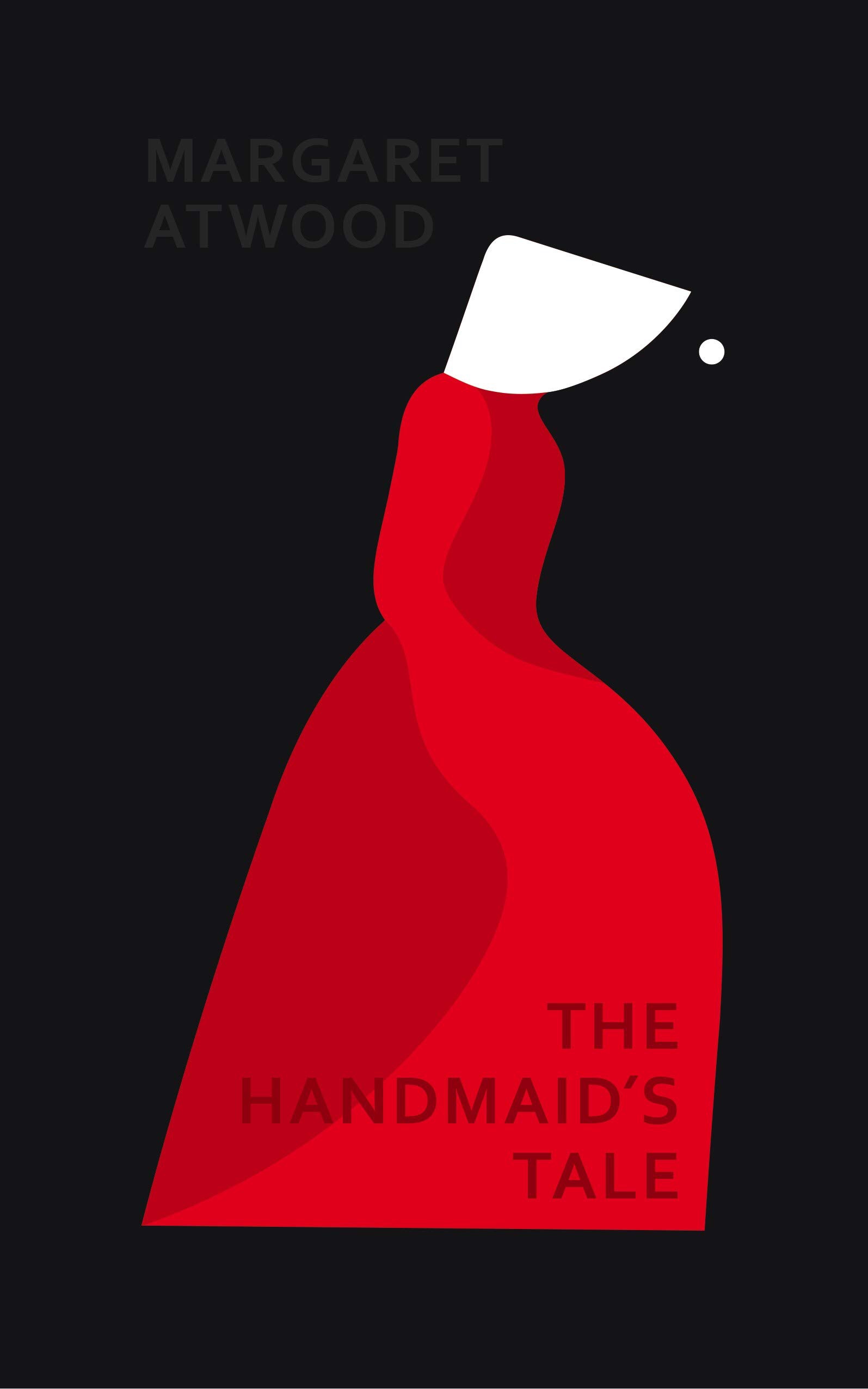
Book Review: The Handmaid’s Tale by Margaret Atwood

There has been a lot of hype around The Handmaid’s Tale lately, particularly in the relativity of this story to modern society and female rights.

My train of contemplation throughout this novel strayed towards human nature: the lack of it, the necessity for it, the justification of it in any and all human societies. What we learn in this novel is that no matter what confines or liberties are put forth to a group of people, or on one person, there is always the uncontrollable element of desire and the inclination towards what is deemed natural.

Nature versus nurture is a long-debated paradox in psychology, but if there was ever a definitive justification for the dominance of nature, it is The Handmaid’s Tale.

Offred is living in the dystopian country of Gilead, where women like her serve one purpose – to reproduce for the family to which they are assigned. Children they bear are not their own, they belong to the “wives” for which they serve.

The society is dominated by archaic rules that condemn women to a life without reading or writing, learning or socializing. Relations between men and women are strictly sexual in scheduled encounters. Though these rules are stringent and the consequences are dire, each character in the novel gives in to their natural desires at some point throughout, giving credence to the idea that although culture can change, human autonomy withstands tests of its strength.

Left wanting more from this novel, I’m looking forward to the sequel that is set to be released in September 2019. I believe that the reasons I’m intrigued, however, resonate with the same inclination towards understanding human nature that the novel surrounds. I have the urge to fit the pieces together and find out how the resolution of conflict plays out in the characters’ lives, rather than a need to understand the potential political upheaval that Atwood creates which could, in our reality, so similarly affect even the most secure of societies.

My interest lies in the humanity- the relationships. Is Offred pregnant? Was her Commander really such a bad guy, or was he primarily good, but drunk with power and circumstance? Does Moira rest on her laurels or continue to fight?

I raced through this book with the constant desire to reach some understanding, I’m not sure of what. I don’t think resolution is really meant to be achieved. This book is not written to make you feel good or resolve fears, but to create them. There is no validation that humanity will will out over any adversity it is faced with. Coming to the close of the story and finding no answers to the great questions of our nature, I moved on, feeling a little deflated and wary of our potential as individuals and as societal beings.

Really interesting and makes me want to have a stern talk with my fiancé about my post-apocalyptic rights.

Beach Reads · Historical Fiction · Romance

Book Review: The Age of Light

The Age of Light by Whitney Scharer

The Age of Light by Whitney Scharer is a historical fiction following the relationship between famed photographers Lee Miller and Man Ray. The two were part of the Surrealist movement in the late 1920s- 1930s. Lee, a reputable model, moves to Paris to fulfill her dream of becoming a photographer. She is determined to be behind the camera instead of at its focus. She meets Man Ray at a party one night and he is intrigued by her beauty. At the time of their meet-cute, Man Ray had already made a name for himself as a leader of the Surrealist movement and was well known for his photographs. He also ran in a circle of well known artists and Lee knew that if she could convince him to hire her as his assistant, she would be able to penetrate the photography world in Paris.

First as his assistant and then as his lover and partner, Lee and Man Ray trademark a technique called “solarization” where they expose the developing picture to light at different times to create an image that looked like a photo’s negative. Although they work very well together in the studio, their relationship becomes quickly blurred. Although Man is an eager teacher and mentor, he also takes credit for ideas that are Lee’s and, intentionally or not, is intent on reminding her that she is merely his assistant. Man becomes possesive and overbearing. Eventually their love affair self destructs, but not before Lee has an extensive foundation in photography and ability to venture out on her own.

Lee Miller was a badass. She saw opportunities and went for them. She was not afraid to put herself out there. She used her beauty to her advantage and was not ashamed. She was determined to separate herself from Man Ray and knew that her career as a photographer and her unique eye were more important that assuaging a possessive lover.  She later became known for her portraits of Pablo Picasso and as a war correspondent in WWII, being one of the first photographers to capture the horror of Dachau concentration camp.

I admit I did not know much about Lee Miller or Man Ray prior to reading this novel. I enjoy when a historical fiction piques my interest in the subject enough for me to research about it after, which The Age of Light did. It was interesting to peruse some of their work after gaining some insight to their short but intense relationship. Overall I would recommend the book. I felt that it may have been too focused on their sexual relationship rather than their careers as photographers but it definitely kept me interested and was written well. Scharer is able to portray Miller and Man Ray’s relationship in such a way that it almost makes the reader imagine it as a series of photographs.

books · Thriller

Book Review: In a Dark, Dark Wood by Ruth Ware

In a Dark, Dark Wood by Ruth WareIn a Dark, Dark Wood by Ruth Ware was recommended to me a few years ago, and I just got around to reading it. As psychological thrillers go, it was solid. The plot was original- but something just fell flat for me.

Leonora is a 20-something living in London who has just been invited by an old school friend to attend a hen party (i.e. bachelorette for American folk). She’s confused by the invitation, as she hasn’t talked to Clare, the bride, in years. In the interest of being social and showing up for an old friend, Nora agrees to attend. What ensues is not your typical bachelorette party fun, but sinister.

I did not buy the plot of this novel, personally. If I went to a bachelorette party, and people I knew were acting shady and downright conniving, I would immediately be on the offensive. Nora is drawn further into herself, doubting her senses and making it easy for her to be taken advantage of.

All of Nora’s issues seem to stem from Clare- her treatment of Nora years ago, and secrets that will come out in the wash. This is a fun story, regardless of believability.