
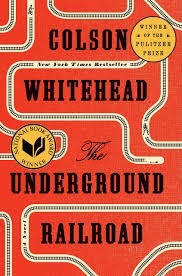
The Underground Railroad by Colson Whitehead was a deviation from the norm in my reading list. Whitehead takes a solidified past event, and uses fictional elements to create a subversive retelling of pre-Civil War America. The fictionalization creates a dystopian past, where relevant modern-day issues are planted like weeds, showing how those issues and prejudices have thrived into the modern day.
Cora is a strong-willed self-preservationist. She lives on a plantation in Georgia, owned and operated by the Randall family, where her mother and grandmother were also slaves. Cora’s mother Mabel was a runaway slave, getting away from the plantation and never being caught. Cora is haunted by her mother’s decision to abandon her daughter, and by the fact that mother is likely living in the North, free from imprisonment and persecution.
Cora is convinced by a friend to run. They set off in the dead of night, making their way into South Carolina. There they find peace, a happy sanctuary, but it’s later discovered that far worse things are happening to free blacks there. Cora needs to continue to run, because there is a known slave hunter after her.
Each of the states she ends up in poses another threat to her freedom. In South Carolina, though the practices were radically better than Georgia, she finds that doctors are “persuading” young black women to be on birth control or forcing them to terminate pregnancies, showing that an underhanded abuse through sterilization is rampant.
After a close call with her pursuer, Cora ends up in North Carolina, where daily hangings in the town square are a source of entertainment. Cora can hear the clapping from her cell in an abolitionist’s attic. Juxtaposed with South Carolina, where blacks were largely free, or so it seemed, North Carolina appears completely outlandish.
This is the unique quality of the novel. By creating such different circumstances in each state, Whitehead is able to create a story where hangings and public displays of anti-slavery sentiment seem rash, when in reality, this was a rampant practice throughout the south during the pre-Civil War era. By fictionalizing certain elements of the novel, Whitehead turns our understanding of ‘acceptable’ upside down. As the book progresses, the reader is inclined to accept that South Carolina, with its own set of problems, was better. When in reality, none of the places Cora lands in are acceptable for her.
Whitehead created the novel around the idea that the Underground Railroad was just that, a true railroad. In reality, the Underground Railroad was a series of houses. Here, it is similar, although there are stations under houses, where escapees can follow to their next destination. I didn’t find that the railroad concept added much to the story, aside from muddying the waters of ‘then’ and ‘now’ further to show the reader how prevalent these sentiments are.
Overall, I thought the book was thought-provoking and different. It brought certain questions about antebellum America to the surface while stifling others. It also strayed from the typical slave-memoir format, and featured a protagonist who was fearful, but never cowed in the face of fear, which may seem unrealistic. Cora’s determination is palpable, and her journey is one worth following.
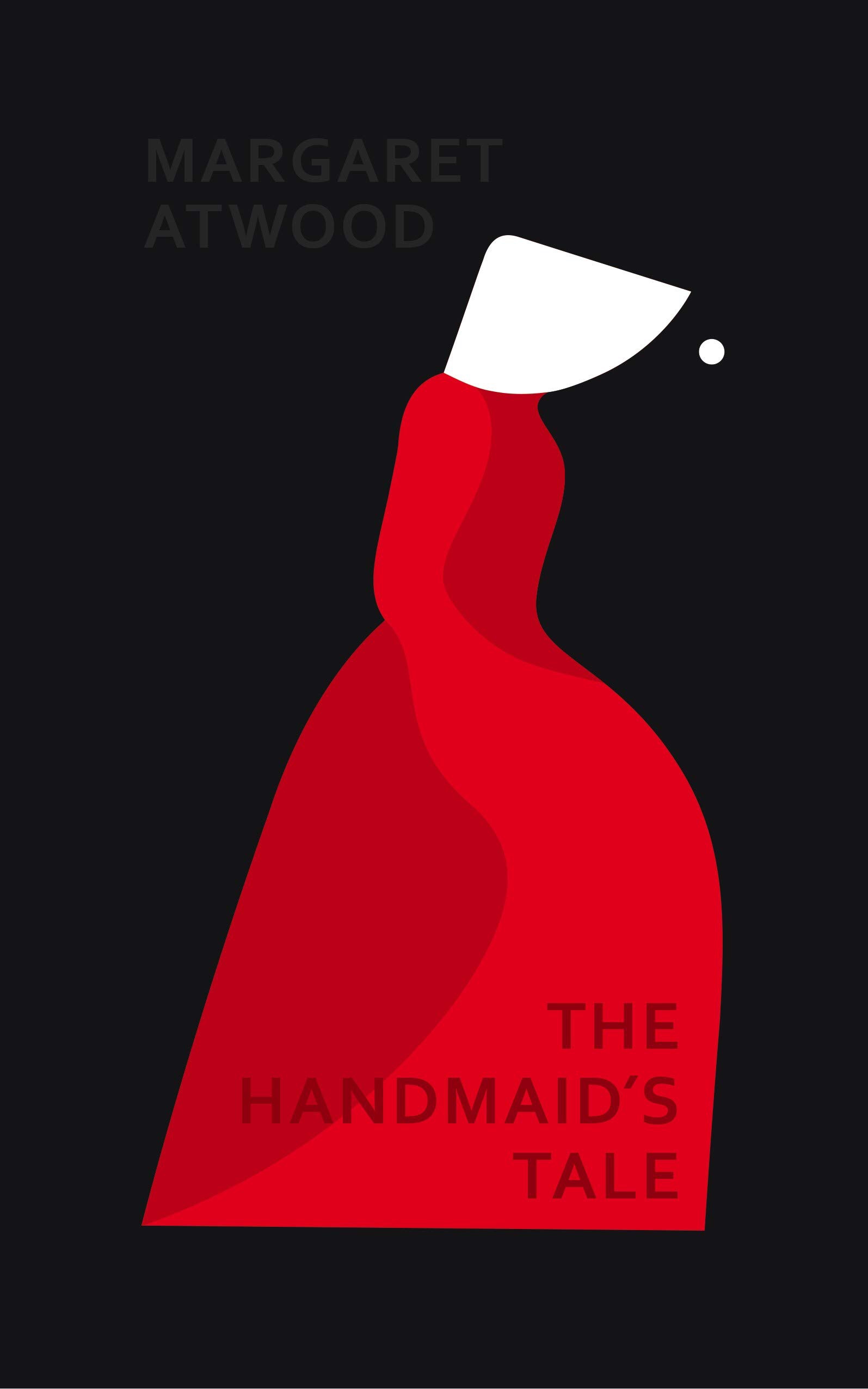 There has been a lot of hype around The Handmaid’s Tale lately, particularly in the relativity of this story to modern society and female rights.
 2 Book Girls