books · Mystery · Romance

Series Review: A Curious Beginning and A Perilous Undertaking by Deanna Raybourn

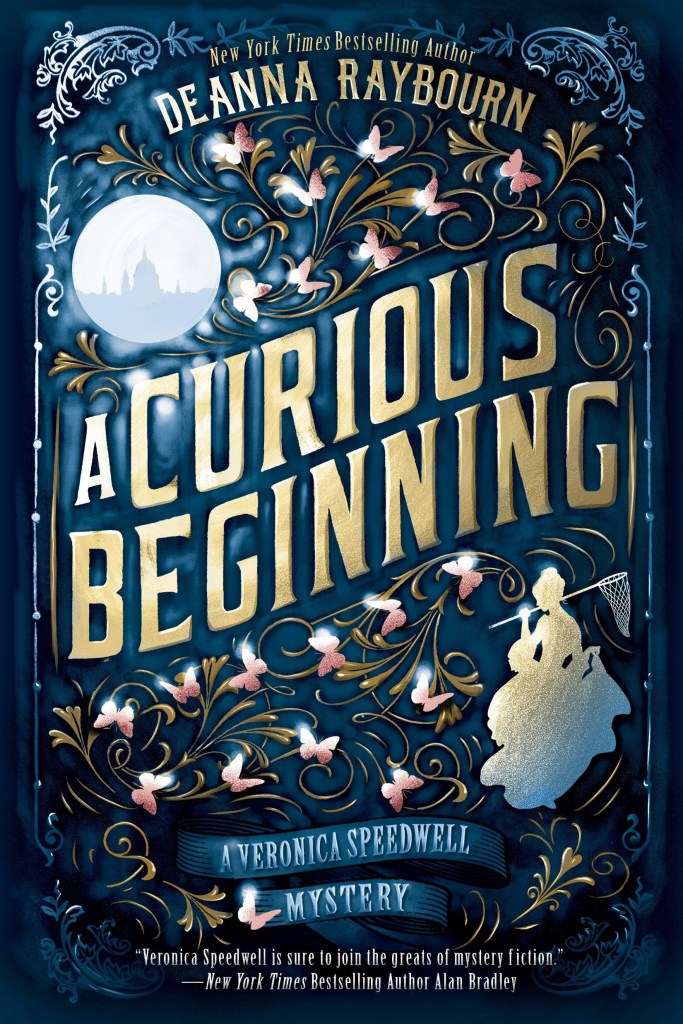
A Curious Beginning by Deanna Raybourn

The first two novels in the Veronica Speedwell mystery series have been highly entertaining. It’s been a while since I’ve been able to jump into a series that takes place in another time and still feel a connection to the characters.

Historical fiction is unique in that sense. It allows the reader insight into another time by allowing for comparison to be made to the present day without the necessity of direct parallels. On the surface, you would think that I would have little to relate to a 19th century orphan who turns out to be a closeted princess. But Veronica is one of the bluntest, sharpest, and most charismatic female protagonists, particularly of fiction more geared towards Young Adults. 

Veronica Speedwell has just buried her aunt when she comes home to a stranger burglarizing her home. It’s no matter for Veronica, who already had plans to leave the family home in search of new adventures, except for the arrival of a stranger whose motive is to help her. The Baron, as he comes to be known, is assured that Veronica is in danger, even though she is quite certain the robbery was random. 

He convinces her to travel with him to London. A young, unmarried woman, Veronica isn’t cawed by this proposition in the least. She decides to assuage this kind man’s fears and accompany him. After her arrival in London, the Baron delivers her into the watch of an old friend, Stoker. Veronica isn’t pleased at all to be passed from man to man, especially because she believes herself not to be in danger. But when the Baron is murdered, Veronica and Stoker team up to find out what happened to the Baron. 

I saw someone refer to the romance between Stoker and Veronica as a “slow burn” the other day, and boy, is it. Veronica is curt and doesn’t mince her words, telling Stoker her exact thoughts as she thinks them, whether they be inappropriate, worldly, or apt to make him blush. Stoker playfully banters with Veronica as well, but is wholly devoted to protecting her, no matter her insistence of not needing protection. Although the attraction is clearly there, their friendship is paramount, which is comforting to the reader. 

Stoker supports Veronica as she comes into new information about herself and is faced with her greatest challenge yet: entering the world of the royal family. 

As the second book unfolds, Veronica and Stoker, backdoor detectives, are hired to investigate the murder of a young female artist. Her lover and the father of her unborn baby is set to hang for the crime, so Stoker and Veronica are up against a ticking clock with limited resources. The police seem set on hanging their culprit, although shadowy forces in the background who hire Stoker and Veronica seem less convinced. 

This is probably the least plausible aspect of the novels: that two natural scientists (Stoker is a physician and taxidermist and Veronica is a lepidopterist: studier of butterflies) would be hired in any capacity to investigate a murder or stop a hanging. But that’s why it’s fun! 

The 19th Century British procedural meets the Jane Austen love story in this series. The protagonists are considered odd, but we know now that they were simply before their time. As such, these books are easy to absorb and the perfect distraction from the now, which is just what I’ve been looking for. Can’t wait to read more!
Historical Fiction · Romance

Book Review: A Fire Sparkling by Julianne MacLean

I acquired A Fire Sparkling as an Amazon First Reads book on my Kindle, free with my Amazon prime membership. I never get overly excited about free books, as I feel the stories are usually not that great. A Fire Sparkling was surprisingly charming, intelligent, and heartwarming.

April and Vivian Hughes are identical twins who reunite as World War II picks up speed. Vivian is the wife of a Cabinet Ministry member, and April has just returned from Germany, where she had been involved with a German officer. Sure of his merits as a standup man, regardless of his fighting for the Nazi party, April is convinced that once the war is over, she will be reunited with Ludwig and he will have denounced Germany and Hitler, only having been involved because of his German roots.

Vivian meets a sad fate, and her dying wish is that April will assume her identity. Pregnant with Nazi Ludwig’s child, April is sure to be sent to an internment camp if they figure out her involvement with a German. April grants Vivian’s dying wish and is blessed to live out most of the war without consequence.

Her ability to speak perfect French brings her face first with an opportunity to go undercover as a spy in France at the height of the war, and all secrets are threatened with exposure. April is asked, “You will be living a lie, you must lose yourself completely in another identity. Do you think you will be able to do that?” Her response: ‘Yes,’ I replied with absolute confidence. ‘I know I can.’

I typically don’t enjoy any story that relies on the use of identical twins. It seems like a bit of a lazy way to craft conflict. MacLean is able, however, to create great distinction between April and Vivian. They are two very different characters, and they both have their stories told.

A Fire Sparkling kept me guessing until the end, and had some great modern romance mixed in as well. I thoroughly enjoyed all of the intertwined story-lines and would be quick to read another Julianne MacLean novel in the future.

books · Romance

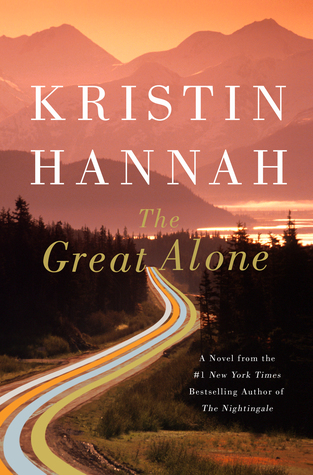
Book Review: The Great Alone by Kristin Hannah

The Great Alone

Having just finished The Great Alone by Kristin Hannah, I am still trying to dissect my feelings on the novel. Currently, I feel…unsettled.

A coming of age novel about a young girl in the 1970s, Leni Allbright is the daughter of a Vietnam War POW, Ernt Allbright, and his wife Cora. Ernt has just returned home to his wife and daughter, but he’s not the same man who left. The war has transformed Ernt, and not for the better. He is out of money and out of options, having been fired from numerous mechanic jobs.

Ernt has decided to move his family to Alaska, to a small peninsula where a fellow Vietnam soldier has left him a plot of land. Big dreams about the unknown formulate as the Allbright family considers how Alaska could be the answer to their prolonged search for happiness.

While summer in Alaska brings days of unending sunlight and the promise of freedom, the Alaskan winter quickly sets in to foil any hope the Allbrights had for that happiness. Ernt’s moods are unpredictable with the winter weather, and the family is unprepared for harsh Alaskan weather.

Banding together to help the Allbrights prepare, even as Ernt protests outside help, the Kaneq community proves to be a steadying force in Leni’s life. Made up of a motley crew of native Alaskans and those newer to Alaska, the community dynamic was one of my favorite parts of the novel. There’s an understanding of true kindness and goodness that permeates the personal boundaries between neighbors. Alaska may be The Great Alone in many ways, but there is always a helping hand for Leni and Cora when they need it. Their problem is learning how to accept help.

Leni thrives in the wilderness. Ernt teaches his wife and daughter to prepare for the end of the world, which is helpful in the Alaskan wilderness, but it doesn’t protect them from him. Ernt’s dark moods are sudden and he has an insistence that “holier-than-thou” men are trying to destroy Kaneq with money and materialism. Nothing will stop him fom aggressively beating his wife.

Truly, this book gave me a lot of anxiety. Cora and Leni live in a world of fear, constantly afraid of what will set Ernt off and end in bruises for Cora. I was bothered not only by the situation, but by Cora’s insistence that her husband “didn’t mean it” and Leni’s insistence in taking care of her mother. While reading, I just wanted one of them to get. the. hell. out. of. there. They referred to each other as peas in a pod and boy did they mean it. Traditional parent/child roles were switched, and I felt the pain of responsibility on Leni’s shoulders.

Kristin Hannah’s luxurious language and portrait of the Alaskan wilderness is something else, but I was hesitant to enjoy it because of my persistent anxiety over Cora and Leni’s situation. As the reader, you knew that Ernt’s behavior was escalating and was going to climax in possible fatal violence, and because of that, the pretty words about open Alaskan country couldn’t distract me.

Leni falls in love with Matthew Walker, the only other boy her age in school. Their love is young and innocent, but Matthew happens to be the son of Ernt’s largest town rival, sealing Leni and Matthew’s fate as star-crossed lovers. As Ernt falls further and further into delusion about the terrors of the outside world, he builds a wall to keep the world out of their homestead, but in turn, Cora and Leni are trapped. Leni and Cora are forced to leave, and Leni is forced to leave behind everything she cares about in Alaska.

Some of the plot points were unrealistic, but I really did enjoy Leni and Matthew’s relationship, particularly his willingness to help her no matter what the cost.

Ernt and Cora were troubling characters- but they were one of the more realistic parts of the story. Toxic, abusive relationships are sadly very common, and I felt Cora was a true representation of a battered woman. Her flaws were heartbreaking and dangerous.

Leni was set up for failure from the start, but against the Alaskan backdrop, she becomes a resilient force to be reckoned with. She excels in the ways her mother failed. She changes the story. Although this novel filled me with a dread I have rarely felt while reading modern fiction, I enjoyed the story. The story ended with less death than I expected, but one quote from the beginning of the novel caught my eye. As a child, Leni understood death as it was described through books – “a message, catharsis, retribution.” Hannah writes “Death made you cry, filled you with sadness, but in the best of her books, there was peace, too, satisfaction, a sense of the story ending as it should.” The Great Alone provided this satisfaction – a story ending as it should.

Beach Reads · Historical Fiction · Romance

Book Review: The Age of Light

The Age of Light by Whitney Scharer

The Age of Light by Whitney Scharer is a historical fiction following the relationship between famed photographers Lee Miller and Man Ray. The two were part of the Surrealist movement in the late 1920s- 1930s. Lee, a reputable model, moves to Paris to fulfill her dream of becoming a photographer. She is determined to be behind the camera instead of at its focus. She meets Man Ray at a party one night and he is intrigued by her beauty. At the time of their meet-cute, Man Ray had already made a name for himself as a leader of the Surrealist movement and was well known for his photographs. He also ran in a circle of well known artists and Lee knew that if she could convince him to hire her as his assistant, she would be able to penetrate the photography world in Paris.

First as his assistant and then as his lover and partner, Lee and Man Ray trademark a technique called “solarization” where they expose the developing picture to light at different times to create an image that looked like a photo’s negative. Although they work very well together in the studio, their relationship becomes quickly blurred. Although Man is an eager teacher and mentor, he also takes credit for ideas that are Lee’s and, intentionally or not, is intent on reminding her that she is merely his assistant. Man becomes possesive and overbearing. Eventually their love affair self destructs, but not before Lee has an extensive foundation in photography and ability to venture out on her own.

Lee Miller was a badass. She saw opportunities and went for them. She was not afraid to put herself out there. She used her beauty to her advantage and was not ashamed. She was determined to separate herself from Man Ray and knew that her career as a photographer and her unique eye were more important that assuaging a possessive lover.  She later became known for her portraits of Pablo Picasso and as a war correspondent in WWII, being one of the first photographers to capture the horror of Dachau concentration camp.

I admit I did not know much about Lee Miller or Man Ray prior to reading this novel. I enjoy when a historical fiction piques my interest in the subject enough for me to research about it after, which The Age of Light did. It was interesting to peruse some of their work after gaining some insight to their short but intense relationship. Overall I would recommend the book. I felt that it may have been too focused on their sexual relationship rather than their careers as photographers but it definitely kept me interested and was written well. Scharer is able to portray Miller and Man Ray’s relationship in such a way that it almost makes the reader imagine it as a series of photographs.

Beach Reads · Romance

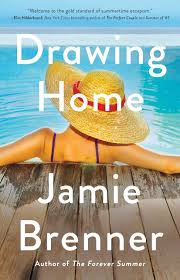
Book Review: Drawing Home

Jamie Brenner’s Drawing Home transports readers to Sag Harbor for the summer. Here we find Emma Mapson and her daughter Penny who are Sag Harbor natives. Emma is a single mother who has been a concierge at the town’s most highly rated establishment, The American Inn, for about a decade. Her fourteen year old daughter Penny is an anxiety stricken teenager trying hard to fit in. Penny often spends afternoons at the hotel while waiting for Emma to finish her shift. At the hotel Penny forms an unlikely relationship with Henry Wyatt, a well known artist who settled in Sag Harbor when the hustle and bustle of New York City became too much for him. Henry mentors Penny and helps her use her art as an escape from her anxiety. When Henry dies, he leaves his multimillion dollar estate to Penny which houses his art collection. This comes as a huge shock to both Penny and her mother, who struggle to make ends meet. Penny sees it as a change to escape her mundane life but Emma is weary of the artist’s decision.

Henry’s decision to bequeath his estate to a fourteen year old stranger also comes as a shock to Bea Winstead, Henry’s longtime manager, business partner and friend. It was Bea that first noticed Henry’s talent and was the founder of the first art gallery to show his work. Although the two lost touch later in life, she questions the validity of his will and decides to travel to Sag Harbor herself to handle it. When Henry first decided to leave the city and settle down in the seaside town, Bea thought he was crazy. When Henry built his estate he told Bea that he wanted it to one day be made into a museum of his work for the residents of Sag Harbor to cherish. This explains why Bea is convinced Emma and Penny swindled their way into Henry’s will.

As Bea begins to investigate Emma and Penny she comes to find out exactly why Henry decided to leave them his estate.  As the novel progresses Penny begins to evolve from a nervous, eager to fit in teenager to a more self confident young adult. We also see Emma figure out how to be a dedicated single parent but also take care of herself and follow her own dreams and desires. An unlikely but entertaining friendship develops between the Mapsons and Bea, and Henry’s plan for the three of them unfolds just the way he imagines…well, almost. Mix up your favorite cocktail and sit on the porch with this quick but worthwhile read.

Historical Fiction · Romance

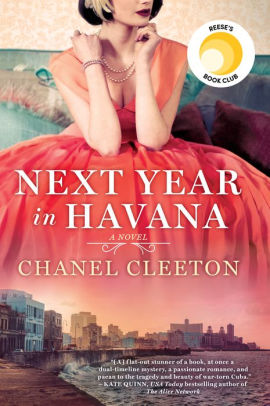
Book Review: Next Year in Havana

Next Year in Havana

Chanel Cleeton’s Next Year in Havana is the perfect early summer novel. Not only did I fall quickly for Cleeton’s characters but she describes Cuba in such detail that you feel like you are there (Think Dirty Dancing: Havana Nights ). The novel flip flops between 1958 and 2017 but the connections between the characters and their circumstances are very prominent.

In 1958 we follow Elisa Perez, the daughter of an elite sugar plantation owner in Havana. Elisa is witnessing the Cuban Revolution from the walls of her mansion in the wealthy part of town. She and her siblings are very privileged and shielded from much of the cruelties that come with the revolution… at least initially. Elisa’s father supports Cuban dictator Batista whom the U.S backs at the time. The rebels are fighting with Fidel Castro who is supporting a revolution and promising the poor an end to the Cuban elite. Elisa falls in love with a rebel fighter, Pablo, very unexpectedly while out at a party. Their love story is brief as he is often away fighting for the cause but their connection remains strong through dozens of love letters over their courtship. When Castro’s rebels are finally successful at running Batista out of the country, many of Batista’s supporters decide to leave Havana due to the fear that they may not be safe under the new ruler. Elisa’s parents and siblings are one of these families and she leaves Cuba with much more than a broken heart.

While we delve deeper into Elisa and Pablo’s love story the novel also introduces Marisol Ferrera, the granddaughter of Elisa Perez who in 2017 is a freelance writer of fluff pieces for a travel publication. She too is the product of a wealthy family living in Miami, Florida where the Perez family settled after leaving Cuba. She has a close bond to her grandmother Elisa and after her death, she is left with the task of taking Elisa’s ashes back to Havana to be scattered. Elisa leaves little instruction on where she wants her final resting place to be but she is confident that Marisol will figure it out. In 2017 after Castro’s death the travel ban between the U.S and Cuba had been lifted and Marisol is finally able to visit Havana, a place her heart longed for her whole life. While there she meets Luis, the grandson of Elisa Perez’s old next door neighbor. Luis is also a revolutionary for his time, eager for new leadership after Castro’s death and hopes for progression for his country. Ultimately Marisol learns a lot about her grandmother’s past all while growing to love Cuba as much as Elisa did.

While reading this novel I found myself thinking a lot about what I would do in Elisa’s circumstance. What if I loved someone who was from a completely different background with very different beliefs? What if our love was literally separated by a revolution and our happiness depended on the outcome of war? I would hope that I would be as brave as Elisa and Pablo were and fight not only for my relationship but also for the livelihood of my family and my country. This novel was enlightening and I learned a lot about Cuba’s history while enjoying the plot and character development. Overall Next Year in Havana was an enjoyable read and one that I would recommend to all fans of historical fiction.

Beach Reads · Romance

Book Review: The Simple Wild by K.A. Tucker

The Simple Wild - K.A. Tucker
A city girl stuck in the Alaskan bush. What could go wrong?

In the past two weeks, I’ve read books set in the Australian outback, the islands of the Azores off Portugal and the Alaskan bush. Books really do allow you to travel the world! The Simple Wild by K.A. Tucker was refreshing, a light, pithy, romantic ride that satisfies the need for some romance reading.

Calla Fletcher is a mid-twenties girl, freshly fired from a bank job, who finds out that her long-lost father, who resides in Alaska, has lung cancer. The story of their reunion is the classic redemption tale – it’s poignant, heartbreaking, and well done. I really enjoyed it.

One issue I took with this book is Calla is made out to be a narcissistic bi*** in the beginning (that’s fine, we all know those people do exist) but she makes a total 180 into a flannel-wearing, no-makeup having lover of a bearded, lumberjack Alaskan man. He teaches her the true meaning of family and love and blah blah. I did really like their story, it just wasn’t thoroughly original.

Overall The Simple Wild kept me entertained and hooked on the characters. A nice segue into light summer reading.

Historical Fiction · Romance

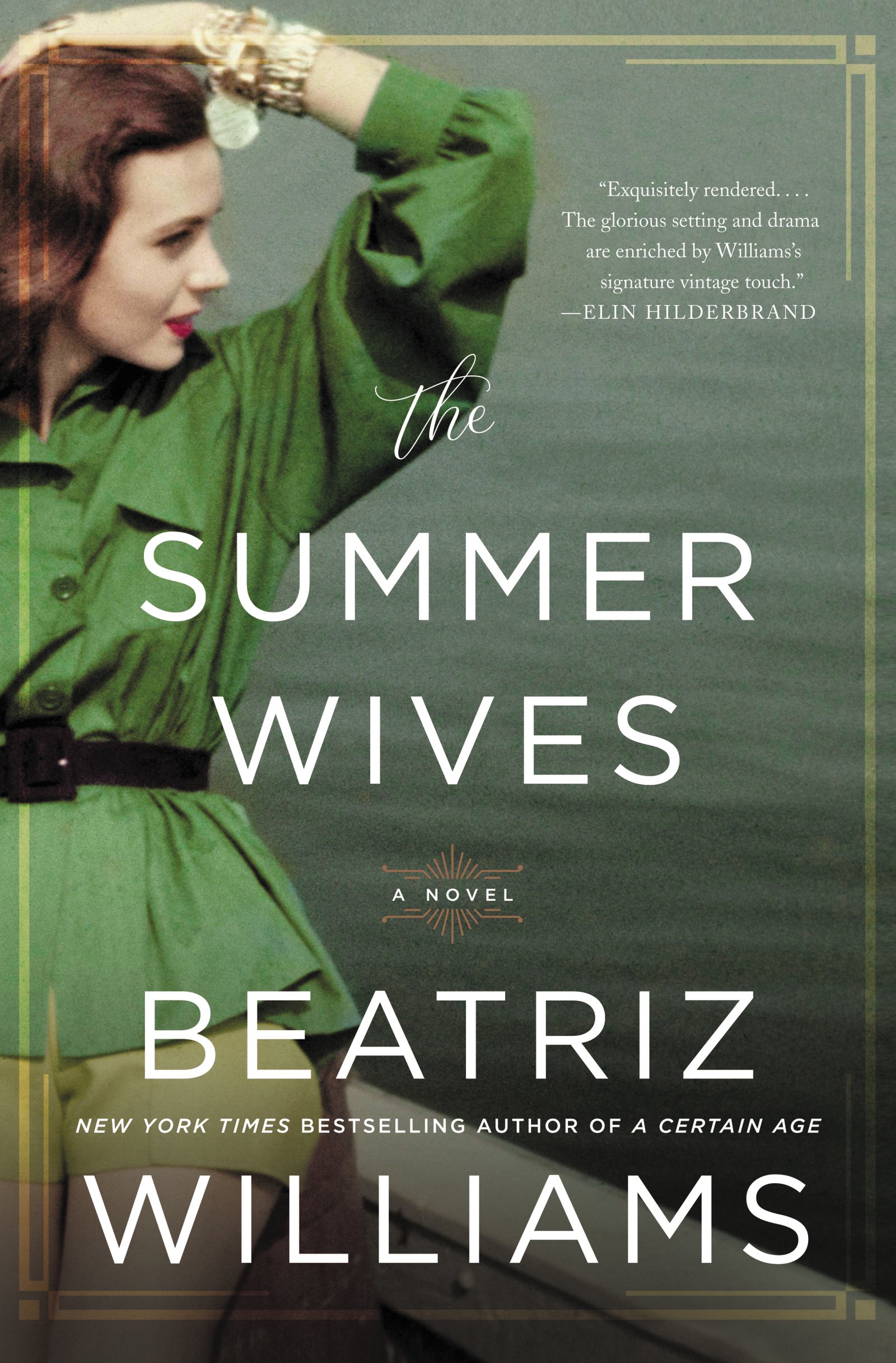
Book Review: The Summer Wives by Beatriz Williams

The Summer Wives by Beatriz Williams

I just Love. Beatriz. Williams. In my opinion, I could end this review there.

That being said, The Summer Wives was not my favorite of her novels – it is significantly less astounding. This, however, is not as much a criticism of the book as it is praise for the author. I truly feel taken in by each one of Williams’ novels – just some more than the others.

I think that I knew this one may be a little flat. The hardcover copy of the novel has sat on my bookshelf for nearly a year. Perhaps the mediocre reviews permeated my subconscious.

Still, I’m glad to have read it. Quick and vigilant, the story marches, like trained troops, towards its realization. The main character of Miranda Schuyler marches like a soldier through her own story, rather than taking the lead as General.

In comparison with other Williams heroines, Miranda was a bit feeble, and not particularly determined to own her story. That’s okay, there are all different types of characters, but I felt like Miranda rolled over and let life happen to her rather than living it.

The one thing she does for herself throughout the noel is to become an actress, and even this wasn’t her own dream, but the dream of her former lover for her. She doesn’t do a lot of thinking for herself, which troubled me.

Miranda’s mother is a complete waste of space. She never defends her daughter or acts in her best interest, choosing to wallow away in the shadow of her husband’s death – who was a di**.

Hugh Fisher is the example of all that is wrong with society, he is rich (or acts like it) and takes and takes from everyone around him, living like a parasite off the emotions of people he has deemed lesser, and who allow him to take advantage.

I am a huge proponent of flawed characters, but overall, there were too many, in roles that were too standard.

The romance, the picturesque setting, the lyrical prose – all magnificent. Williams truly has a way with sentence structure. I am really looking forward to her next novel, The Golden Hour, due out in July. I hope the next novel reflects all the true writing prowess Williams possesses to tell a story and to make the reader completely bereft at the thought that they can’t be a part of the story itself, upset every time they have to close the book. Williams has given me that feeling before, and I’m looking forward to it again.

Beach Reads · Romance

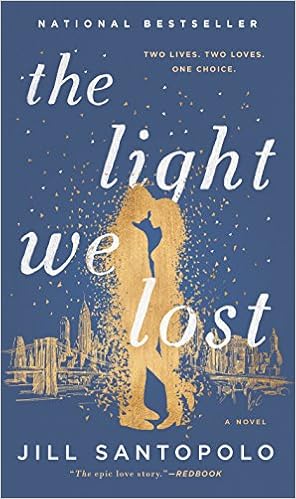
Book Review: The Light We Lost by Jill Santopolo

Image result for the light we lost

“Two roads diverged in a yellow wood, and sorry I could not travel both” – Robert Frost

Everyone has a moment- a defining moment in life where there are two paths, two options for how life will go, and you have to choose just one. For some this is encountered in deciding practical things such as which college to go to, what to major in, which job offer to take. For others it involves love and the person you end up spending your life with. Or maybe it’s both. Maybe you have a lot of moments you forever look back on and wonder, “where would I be if…”

The Light We Lost by Jill Santopolo is a story full of individuals making decisions that affect the course of their lives. Lucy is an ambitious, smart woman who falls in love, twice. She falls in love first with a boy she meets in college. They are young and full of life. Their love is passionate and raw. Their love is something that she is never able to fully move on from. Their love also breaks her more than once and eventually, this love leaves her. She goes on to find another love a little later in life. This love is more practical, more reliable and in many ways makes more sense. This love is mature and safe. Readers follow Lucy as she grows from a college girl, in love, to a full time working mom, also in love, and listen as she recounts all of the decisions that she makes and their consequences.

The novel captured my attention very quickly. I am a sucker for a good love story- and in this book there are two. Although Lucy alludes to a not so happy ending more than once, I did hold out hope that she would end up finding her way back to her true love. I’ll leave it up to you to decide who you think that is. The Light We Lost is definitely worth a read.