Mystery

Book Review: Opium and Absinthe by Lydia Kang

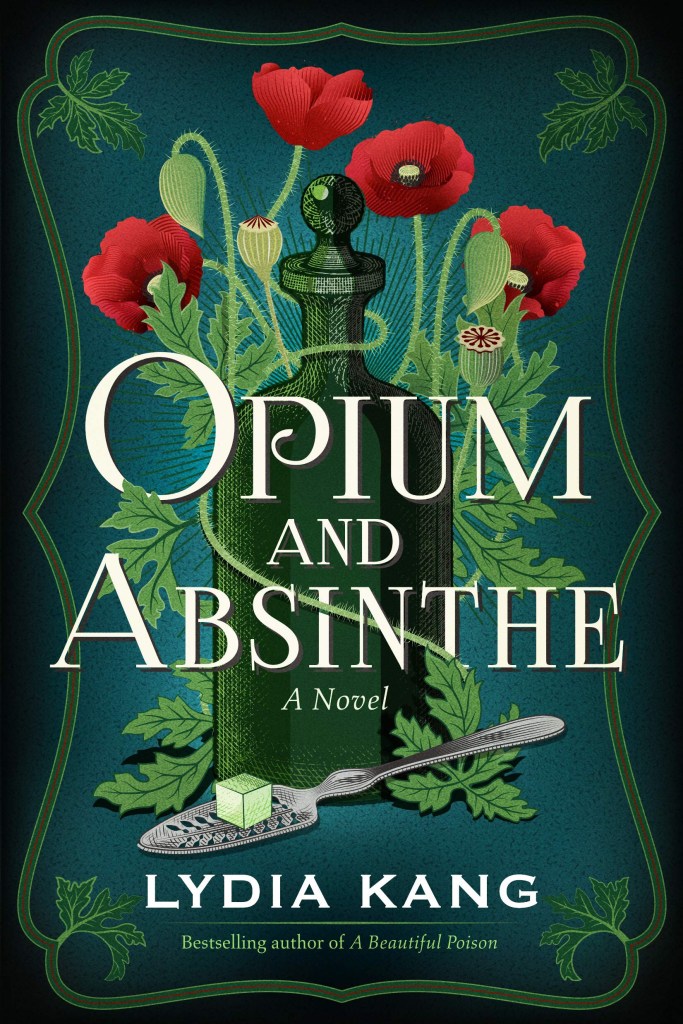
Opium and Absinthe by Lydia Kang

When you think about New York City at the turn of the century, 1899 going on 1900, what do you think of? In the past I might have said Industrialization, immigration and tenement living. All of these play a role in Lydia Kang’s Opium and Absinthe, but the story covers so much more. From the Upper West Side to the Lower East, from the Astors to the Newsies, this story explores the inner workings of NYC and a young well-to-do girl who navigates them in order to solve the mystery of her sister’s death.

Tillie Pembroke is a teenage girl with a fondness for reading. She loves to learn and consistently consults her Dictionary, a steady companion. Tillie suffers a horse riding accident, breaking her collarbone. When she wakes, she gets the news that her sister is missing, and later finds she’s been murdered. Lucy is found with small bite marks on her neck, her body devoid of blood. In her despair, Tillie turns to the medicines that her doctor has prescribed for her pain – laudanum, opium, morphine, and then heroin. Each that is provided to her is easier to secure than the last. They are given easily as an outlet for her pain, as a sedative, to prevent “hysteria” as is so common with emotional women. Most importantly, they are given to silence her, to stop her asking questions, to demure her inquisitive nature.

The story is told through Tillie’s perspective, and through most of it, Tillie is addicted to painkillers. I thought this was an intriguing POV. As Tillie comes to realizations about her wellness, her sister’s death, her relationships, the reader learns them through the clouded lens of Tillie’s drug use. The reader sympathizes with Tillie’s need for opium to dull the pain towards the beginning, but panics about her subsequent addiction. It was a perfect way to make sure the reader empathized with Tillie and was invested in her recovery.

This part of the novel was an important commentary on mental health, which Lydia Kang actually mentions in her writer’s notes. Although the prescriptive qualities of these drugs were permissible at the time, the overwhelming addictive qualities were ignored. Tillie is checked into a rehab facility, but is quickly given heroin pills by a suitor in an effort to win her affections. Tillie is eventually able to possess the mental stamina to withdraw herself from the drugs, her need for the truth about her sister driving her desire to be sober.

Once lucid, Tillie dives into her leads, investigating with the help of a Newsie turned-journalist, Ian Metzger. Ian is a parentless teen who shows Tillie the underbelly of the city, sparking her interest in journalism further.

I really enjoyed this book. Paralleled by Bram Stoker’s Dracula, which had just been released at the time, Tillie is enthralled by vampire lore, trying to tie the threads of her sister’s death together to identify a killer. Quotes from Dracula open each chapter, setting the stage for the macabre mystery. In the end, however, Tillie finds that a much more human foe is the culprit.
Historical Fiction

Book Review: The Giver of Stars by Jojo Moyes

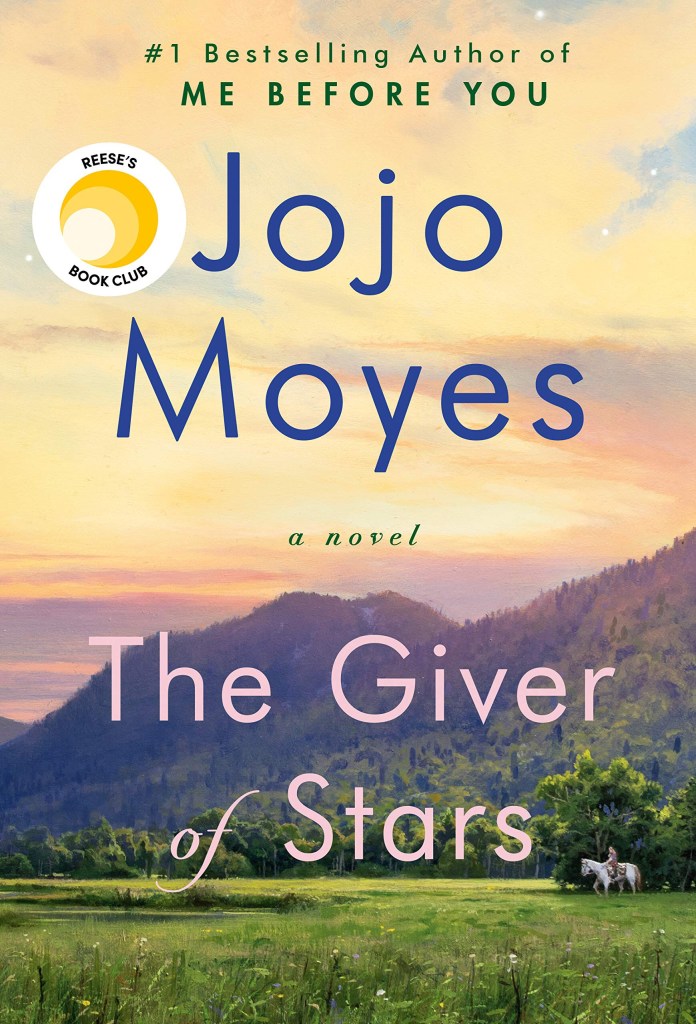
The Giver of Stars by Jojo Moyes.

Jojo Moyes is one of my unsurpassed favorite writers, and with The Giver of Stars she has challenged herself as well as her readers. The Giver of Stars took me a bit to get into, mostly because I got a puppy (hi Charlie!) and was behind in all aspects of life. As I continued the story, it became uncanny how the story paralleled the climate of today. How one group of oppressed people can rise above their supposed station and effect real change.

Alice Van Cleve is recently married and has moved across the ocean from England to Baileyville, Kentucky with her new husband, Bennett. Alice lives with Bennett and his father, a fierce-tempered man who likes women to be seen and not heard. When Alice begins delivering books for a traveling Packhorse Library out of Baileyville, Geoffrey Van Cleve is unhappy, and the whole town knows it.

Alice befriends Margery O’Hare, a rough and tumble rebel who has grown up in Baileyville her whole life, living with the stigma of her drunk father. Margery’s insistence on not adhering to traditional gender norms gets her labeled a troublemaker just like her father. Alice and Margery form a fast friendship, and when her father-in-law raises his hand to Alice, she moves in with Margery, vowing never to return to the Van Cleve household.

As Alice continues to deliver library books to the far reaches of the Kentucky mountains, Geoffrey Van Cleve makes it his mission to spearhead the overthrow of the library. He formulates a town meeting, where he says, “Don’t get me wrong. I am all for books and learning…but there are good books and there are books that plant the wrong kinds of ideas, books that spread untruths and impure thoughts. Books that can, if left unmonitored, cause divisions in society. And I fear we may have been lax in letting such books loose in our community without applying sufficient vigilance to protect our young and vulnerable minds” (209).

Geoffrey Van Cleve is attempting to stifle modern thought in women throughout his small community. The “untruths and impure thoughts” he references are a book of modern sex, written so that married people can understand biology and pleasure. He is looking to stamp out education as it is precipitating change in his society that he does not wish to see.

Reading the words “divisions in society” and “vigilance” italicized in the text, however, made me think only of our current station as a country. Education and knowledge, or the lack thereof, have for so long been weaponized to both unite and divide communities. Educating the people of the mountains meant that Van Cleve’s mining business was under scrutiny. More educated citizens meant an angry community ready for action against him.

In the same way, vigilance can be viewed by opposite parties as a stalwart response, or as an unprompted and unchecked oppression. Van Cleve’s vigilance is one that seeks to keep those oppressed (in the case of this novel, women) at that station. Vigilance, with connotations of dedication and perseverance, is generally positive. But in this case, and in cases of oppression today, vigilance is carried out by those fraught with misinformation and a desire to resist change.

The novel comes to detail a public trial for Margery, who is accused of killing Clem McCullough, a drunk from the mountains. The McCulloughs and the O’Hares have long been enemies, and as such, the town is swift to persecute her in the court of public opinion, with Geoffrey Van Cleve at the helm. As the town seeks to vilify the actions of the librarians, the hate causes their bonds to grow stronger, their unwavering support for Margery a key ingredient to winning the trial and finding justice, and more importantly, a future for their cause.

The Giver of Stars was extremely entertaining and filled with discussion. Oh how things have changed and how they haven’t.

books · Historical Fiction

Book Review: This Tender Land by William Kent Krueger

This Tender Land by William Kent Krueger.

This Tender Land by William Kent Krueger is a marvel of modern American fiction. I truly want to shout from the internet rooftops about the injustice of this book not getting enough attention. Set in 1932 Minnesota, a gang of young orphans, brothers Albert and Odie O’Banion, 6-year-old Emmy Frost and their mute Sioux friend Mose, run away from the Lincoln Indian Trading School, where displaced young Indians are held and schooled for their alleged betterment, having been driven off the reservations and separated from their families. Albert and Odie, the only two white boys, were orphaned while traveling with their father, and so ended up at the school.

The group is on the run. They’ve left disaster behind in their wake at the Lincoln School, and their need to stay away from the Headmistress Mrs. Brickman, whom they nickname the Black Witch, is paramount. The group sets off down the Gilead River, stopping for a number of misadventures along the way.

 The protagonist, Odie, grapples with his faith as the group continues their travels south to Saint Louis. Odie begins to say that “God a tornado,” because he feels that the only way God acts in his life is in the form of tragedy. As Odie travels, his belief in the Tornado God only worsens, as he often grapples with making decisions far beyond his years in the face of adversity.

As the title may suggest, This Tender Land is a coming of age story, not just for Odie and his fellow ‘Vagabonds’ as they call themselves, but for America. It is reminiscent of a time in our country’s youth, where, befouled by misdeeds and missteps, Great Depression-era America strangled the Midwest. It was a time where hurt accumulated in the hearts of Americans and fueled the distaste of a seemingly no-good government. An impressionable orphan, Odie learns quickly that there is a notable difference between those down on their luck due to the economy and those who seem to not be affected. He can’t understand how people could live lives of luxury knowing how the other half lives. His innocence is noble and refreshing.

Odie acts with compassion towards a number of people he meets on his journey, and though he feels cursed by bad luck and circumstance, he continues to act that way. He gives to those in need, and though he is rarely rewarded, he continues to do so. This devotion slowly becomes his faith, and the pillar on which he is able to find strength in forgiveness and to find his way home.

This Tender Land is well-written, transcending genres in a way I haven’t seen before. There are traces of thriller in the plot, in addition to nuances of the mystical variety. I read this in two days and I am sad to have to leave the characters within the book covers. If you’d like to feel a little inspiration while we all keep moving through difficult times, this story will buoy you towards solace and belief in healing.

books · Historical Fiction · Science/ Alternative Fiction

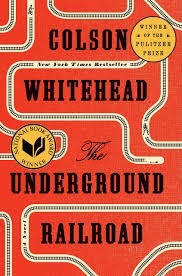
Book Review: The Underground Railroad by Colson Whitehead

The Underground Railroad by Colson Whitehead

The Underground Railroad by Colson Whitehead was a deviation from the norm in my reading list. Whitehead takes a solidified past event, and uses fictional elements to create a subversive retelling of pre-Civil War America. The fictionalization creates a dystopian past, where relevant modern-day issues are planted like weeds, showing how those issues and prejudices have thrived into the modern day.

Cora is a strong-willed self-preservationist. She lives on a plantation in Georgia, owned and operated by the Randall family, where her mother and grandmother were also slaves. Cora’s mother Mabel was a runaway slave, getting away from the plantation and never being caught. Cora is haunted by her mother’s decision to abandon her daughter, and by the fact that mother is likely living in the North, free from imprisonment and persecution.

Cora is convinced by a friend to run. They set off in the dead of night, making their way into South Carolina. There they find peace, a happy sanctuary, but it’s later discovered that far worse things are happening to free blacks there. Cora needs to continue to run, because there is a known slave hunter after her.

Each of the states she ends up in poses another threat to her freedom. In South Carolina, though the practices were radically better than Georgia, she finds that doctors are “persuading” young black women to be on birth control or forcing them to terminate pregnancies, showing that an underhanded abuse through sterilization is rampant.

After a close call with her pursuer, Cora ends up in North Carolina, where daily hangings in the town square are a source of entertainment. Cora can hear the clapping from her cell in an abolitionist’s attic. Juxtaposed with South Carolina, where blacks were largely free, or so it seemed, North Carolina appears completely outlandish.

This is the unique quality of the novel. By creating such different circumstances in each state, Whitehead is able to create a story where hangings and public displays of anti-slavery sentiment seem rash, when in reality, this was a rampant practice throughout the south during the pre-Civil War era. By fictionalizing certain elements of the novel, Whitehead turns our understanding of ‘acceptable’ upside down. As the book progresses, the reader is inclined to accept that South Carolina, with its own set of problems, was better. When in reality, none of the places Cora lands in are acceptable for her.

Whitehead created the novel around the idea that the Underground Railroad was just that, a true railroad. In reality, the Underground Railroad was a series of houses. Here, it is similar, although there are stations under houses, where escapees can follow to their next destination. I didn’t find that the railroad concept added much to the story, aside from muddying the waters of ‘then’ and ‘now’ further to show the reader how prevalent these sentiments are.

Overall, I thought the book was thought-provoking and different. It brought certain questions about antebellum America to the surface while stifling others. It also strayed from the typical slave-memoir format, and featured a protagonist who was fearful, but never cowed in the face of fear, which may seem unrealistic. Cora’s determination is palpable, and her journey is one worth following.

books · Mystery · Romance

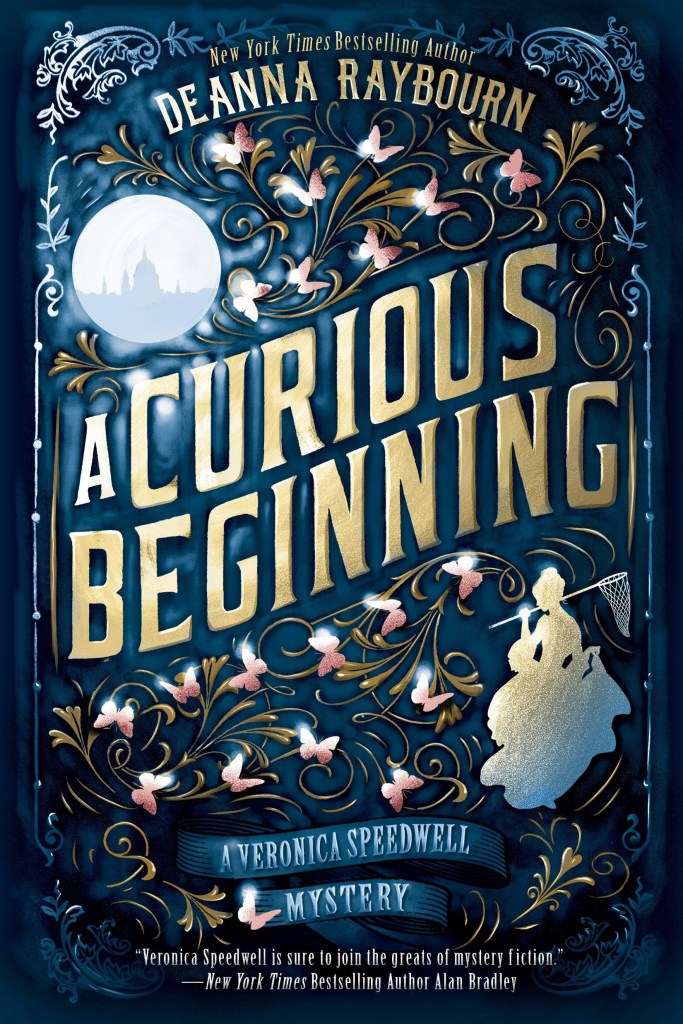
Series Review: A Curious Beginning and A Perilous Undertaking by Deanna Raybourn

A Curious Beginning by Deanna Raybourn

The first two novels in the Veronica Speedwell mystery series have been highly entertaining. It’s been a while since I’ve been able to jump into a series that takes place in another time and still feel a connection to the characters.

Historical fiction is unique in that sense. It allows the reader insight into another time by allowing for comparison to be made to the present day without the necessity of direct parallels. On the surface, you would think that I would have little to relate to a 19th century orphan who turns out to be a closeted princess. But Veronica is one of the bluntest, sharpest, and most charismatic female protagonists, particularly of fiction more geared towards Young Adults. 

Veronica Speedwell has just buried her aunt when she comes home to a stranger burglarizing her home. It’s no matter for Veronica, who already had plans to leave the family home in search of new adventures, except for the arrival of a stranger whose motive is to help her. The Baron, as he comes to be known, is assured that Veronica is in danger, even though she is quite certain the robbery was random. 

He convinces her to travel with him to London. A young, unmarried woman, Veronica isn’t cawed by this proposition in the least. She decides to assuage this kind man’s fears and accompany him. After her arrival in London, the Baron delivers her into the watch of an old friend, Stoker. Veronica isn’t pleased at all to be passed from man to man, especially because she believes herself not to be in danger. But when the Baron is murdered, Veronica and Stoker team up to find out what happened to the Baron. 

I saw someone refer to the romance between Stoker and Veronica as a “slow burn” the other day, and boy, is it. Veronica is curt and doesn’t mince her words, telling Stoker her exact thoughts as she thinks them, whether they be inappropriate, worldly, or apt to make him blush. Stoker playfully banters with Veronica as well, but is wholly devoted to protecting her, no matter her insistence of not needing protection. Although the attraction is clearly there, their friendship is paramount, which is comforting to the reader. 

Stoker supports Veronica as she comes into new information about herself and is faced with her greatest challenge yet: entering the world of the royal family. 

As the second book unfolds, Veronica and Stoker, backdoor detectives, are hired to investigate the murder of a young female artist. Her lover and the father of her unborn baby is set to hang for the crime, so Stoker and Veronica are up against a ticking clock with limited resources. The police seem set on hanging their culprit, although shadowy forces in the background who hire Stoker and Veronica seem less convinced. 

This is probably the least plausible aspect of the novels: that two natural scientists (Stoker is a physician and taxidermist and Veronica is a lepidopterist: studier of butterflies) would be hired in any capacity to investigate a murder or stop a hanging. But that’s why it’s fun! 

The 19th Century British procedural meets the Jane Austen love story in this series. The protagonists are considered odd, but we know now that they were simply before their time. As such, these books are easy to absorb and the perfect distraction from the now, which is just what I’ve been looking for. Can’t wait to read more!

Memoir

Book Review: Finding Chika by Mitch Albom

mitch albom

It’s not every day that a book like Finding Chika comes across your lap, and firstly, I’d like to thank Mitch Albom for his tireless efforts to capture the human experience in ways that are so often indescribable. Albom, a longtime author and journalist, also happens to be a philanthropist, funding and operating an orphanage in Haiti. It was at that orphanage, the Have Faith Haiti Orphanage, that Albom met Chika Jeune. Chika was born just before the devastating earthquake that rocked Haiti in 2010, but unfortunately for Chika, the earthquake was the least of her troubles

Chika, a smart and spunky young girl with a big attitude, starts to show signs of illness at the orphanage. One of her eyes doesn’t remain fully open and she walks with a slight limp. After bringing Chika to a neurologist in Haiti, she is deferred for diagnosis in the United States. Albom and his wife Janine take her in, starting their almost two-year journey as her legal guardians.

Chika is diagnosed with DIPG, or diffuse intrinsic pontine glioma, a tumor located in the middle of the brain stem. As such, the tumor is inoperable. It cannot be removed fully without harming critical parts of her brain. At the moment of diagnosis, before his relationship with Chika has even begun to develop, Albom writes, “Anyone who has sat through that slice of time, when you don’t know something awful and then you do, will confirm that it is literally a bend in your life, and what is critical is what you choose next; because you can view a diagnosis many ways – as a curse, a challenge, a resignation, a test from God.”

Albom perseveres against viewing the diagnosis as a curse. So begins a long journey of experimental treatment, success, and failure to treat Chika. And all through it, Mister Mitch and Miss Janine are there.

Watching Albom navigate parenthood as an older man is the most heartwarming and then heartbreaking aspect of this memoir. The reader falls in love with Chika. She is a delight – innocent, pure of faith, devoted to her family. But Albom’s description of her as the catalyst for turning him into a man and making him a father is undoubtedly the sweetest. Albom also describes how his wife takes to motherhood, how it changes his attraction to her, makes him fall in love with her even more. This little girl truly changed their marriage, evolving it and making it stronger for knowing her. Without knowing her power, Chika turns two successful, happy, thriving adults into a family, and give them a purpose beyond themselves that is unfairly taken from them.

Chika may not understand what Albom does for work in a broad sense (“Do you have to go to work today, Mister Mitch – Do you have to write a book?”), but she explains his job as this: “Your job is to carry me!” Albom translates that into a lesson that permeates the entire narrative – “What we carry defines who we are. And the effort we make is our legacy.” Choose your burden, follow that path, and commit to the effort it may take to succeed because that defines meaning and purpose.

Mitch Albom is an expert storyteller. This is a tearjerker, but the tears are more than worth getting to know Chika, a brave little soul.

books · Mystery

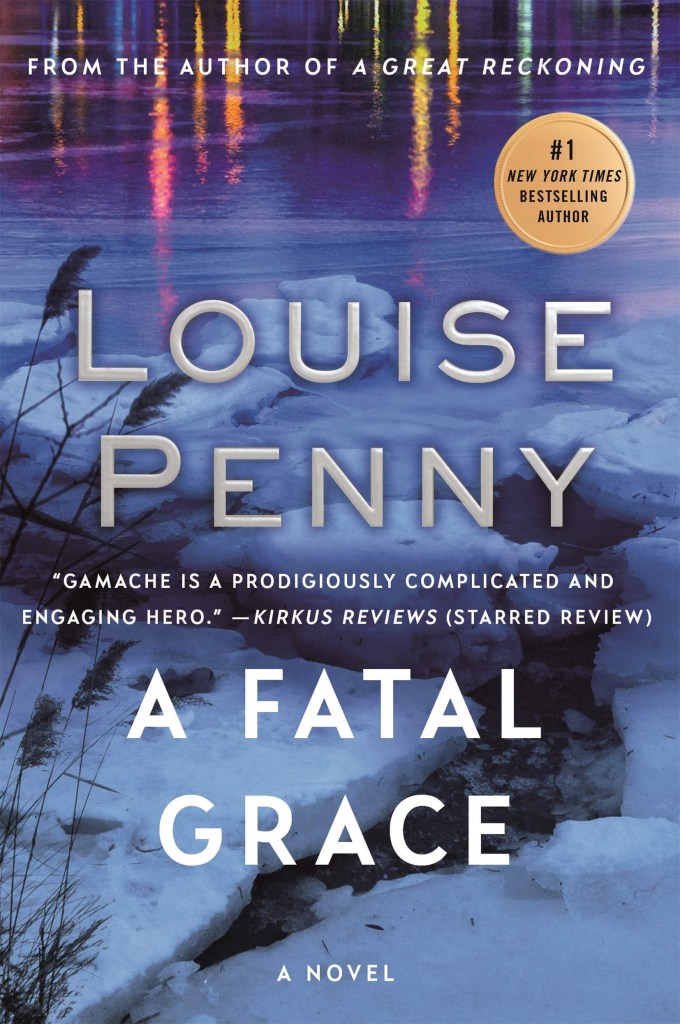
Book Review: A Fatal Grace by Louise Penny

A Fatal Grace is the second novel in the Chief Inspector Gamache series by Louise Penny. Popular with the bookstagram community and in online circles, Louise Penny is well-known for her penchant for the murder mystery. She’s been creating the world of Gamache since 2005 with the publication of Still Life.

Still Life finds Chief Inspector Armand Gamache called to Three Pines to investigate the murder of an older woman, Jane Neal. A Fatal Grace brings the reader back to Three Pines for another investigation, this time of a middle-aged woman universally disliked, CC des Poitiers. 

Penny’s newest novel in the series was released in late 2019 and having heard good things about it, I was interested in starting the series from the beginning. Now, after finishing the sophomore book in the series, I feel more apt to comment on the story and the characters themselves. The series has now fully lured me in with its rich descriptions of land, folk, and lore.

​Initially I was concerned about Penny’s return to Three Pines. There are a fair few books in the series, and I kept thinking about the actuality that so many murders would occurin a sleepy, small town like Three Pines. I was wary that the series would begin to seem unbelievable. But comforted by my familiarity with the characters and the backdrop, I fell quickly into A Fatal Grace and didn’t look back. 

​Many of the characters from Still Life resurface in the novel, including Clara and Peter Morrow, local artists who were close to the murdered Jane Neal. There are also a number of familiar faces in the owners of the local bistro, Olivier and Gabri, and the retired poet that Gamache so admires, Ruth Zardo. 

​Aside from my concerns that there wouldn’t actually be so many murders in a small town like this, my other concern about believability was brought to light in the happenstance way that Gamache conducts his investigations. He ingrains himself in the politics of the town, getting to know each person and what makes them tick. He tells a young detective Robert Lemieux, “You need to know this. Everything makes sense. Everything. We just don’t know how yet. You have to see through the murderer’s eyes. That’s the trick, Agent Lemieux, and that’s why not everyone’s cut out for homicide. You need to know that it seemed like a good idea, a reasonable action, to the person who did it…No, Agent Lemieux, our job is to find the sense.”

​Of course, this notion of knowing that the crime makes sense, and trusting that it does, propel Gamache to be the talented investigator that he is. But his methods are somewhat unorthodox. I find that his friendships with the members of the town are so close, that he offers information to could-be killers. He is often found at the bistro talking casually to someone that the reader later finds out has a major motive. I wondered why a lot of these conversations weren’t taking place in police headquarters, or atleast being recorded. It almost seems that Gamache’s utmost trust in the world “making sense” also makes him somewhat naïve. This naiveté may end up becoming a weakness. 

CC des Poitiers is an awful human – rude, self-obsessed, and undeserving of any remorse. Still, Gamache must investigate who decided her life would be cut short. CC is electrocuted in a near impossible murder. She is killed while watching a curling match, her un-gloved hand on a metal chair which has been connected to a generator. She is standing in a puddle, and her shoes have metal on them. All of these would have to be known by the murderer in order to kill her. Gamche sets to work, investigating her husband, her daughter, and various others in the town. As he investigates though, he comes upon another murder in Montreal and is faced with the reality that the cases may not be unrelated. I am thoroughly enjoying the Chief Inspector Gamache series and I’m looking forward to reading more from Louise Penny.

Mystery · Thriller

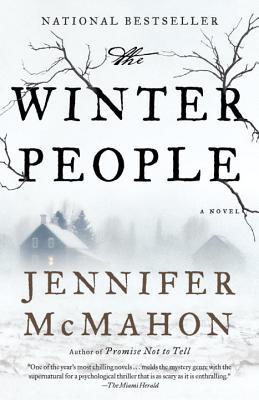
Book Review: The Winter People by Jennifer McMahon

The Winter People
The Winter People by Jennifer McMahon is an eerie mystery set in rural Vermont.

Happy New Year from the 2 Book Girls! It looks like we’ve taken an unplanned hiatus over the last few months, with holiday plans and travel getting in the way of sitting down and enjoying a good book! I have been listening to a few audiobooks, which are easy to tune in to on a plane or a train. Still, I found myself ravenous for a new book in some quiet moments around the New Year. The Winter People by Jennifer McMahon ended up being an enjoyable surprise.

Truth be told, I took the book on vacation because it was small and packable, never a bad reason! The story is written in two different time periods: 1908 and the present day. Following the story of a modern teenage girl living in rural Vermont, Ruthie, and a young new mother in the early 1900s, Sara, the novel adroitly switches back and forth in sequence.

Sara Harrison Shea is the subject of lore for the constituents of West Hall, Vermont. She was allegedly killed by her husband, Martin, after the tragic death of their young daughter, a family torn apart by grief. The house they lived in, in front of the famed landmark mountain outcropping the Devil’s Hand, is said to be haunted. That historic house is now inhabited by a family named the Washburne’s.

Ruthie Washburne comes back from a night out to find her mother gone, a cup of tea still on the table. She goes to sleep and awakes to her mother still missing, and her six-year-old sister asking where she is. Ruthie takes on all the responsibility of caring for her sister, while simultaneously trying to figure out where her mother has gone.

Ruthie and her sister, Fawn, discover hidden papers in the floorboards of the house in their search for clues about their mother, the diary of Sara Harrison Shea. The diary elucidates the tale of the death of Sara’s daughter Gertie, and her decision to bring her back from the dead. Sara knew the secrets of awakening the dead, or creating sleepers[rd1] , from her pseudo-adopted mother, an aboriginal woman who raised her as her own. Auntie’s tragic death is also documented in Sara’s writings.

As Ruthie starts asking questions in town, she finds that the lore of Sara Harrison Shea may be more than just lore. With finding her mother as her North Star, Ruthie meets some people who simultaneously help her understand where her mother may be, and throw her into a new line of fire.

Ruthie is a bold character, and I found her storyline very compelling. Her wholehearted interest in keeping her sister safe throughout the novel is juxtaposed by her typical teenage personality in the first few chapters. I found her growth in the face of adversity to be paramount to the novel’s realism. Although the subject of awaking the dead can often be steeped in tales of witchcraft, I found the basis of the novel was more historic, making the tale somewhat more believable.

The Winter People was thoroughly entertaining, and I will be picking up more work by Jennifer McMahon.


 [rd1]

Fantasy

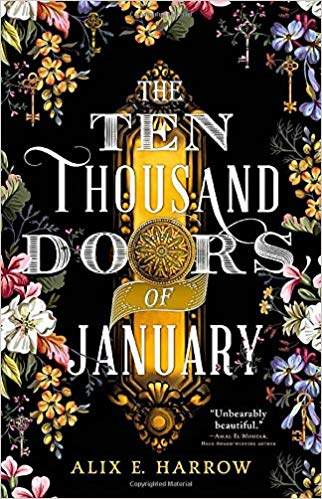
Book Review: The Ten Thousand Doors of January by Alix E. Harrow

To be honest, I found The Ten Thousand Doors of January to be a bit of a slog. Although well written, this coming-of-age narrative about a girl searching for her identity in the world fell flat. Interestingly enough, the whole premise of the book is that the world is not flat, but in fact, has many dimensions; doors (or Doors, using capitalization to illustrate their importance) that open thresholds to new worlds.

January Scaller is a young girl who has been adopted by a wealthy aristocrat. She is dark-skinned in the country of Vermont in the late 1800s, a time when the word “savage” is often used in normal conversation. Her presence in the well-to-do world of her guardian, Mr. Locke, is ever the source of contempt among his peers.

January’s father is an adventurist, employed by Mr. Locke to collect treasures around the world for Locke’s collections and auctions. January has always resented her father constant traveling, leaving her behind. She discovers a book called The Ten Thousand Doors that finally sheds some light on her father’s mysterious life.

At its core, this book is about one girl’s search for her identity, even when she is told to just “be a good girl” and count her blessings of good fortune. She seeks answers, and she finds them, through a series of misfortune and an overly trusting attitude. Her ultimate reward is finding direction and purpose in a world where she has consistently had none.

I was a little disappointed in the novel’s meandering. For a story that is based on the quest to find identity and purpose, it felt purposeless. January’s story almost feels like it is being set up for a series.

I wasn’t in love with the story, but I didn’t dislike it either. All around, a good debut from Alix E. Harrow.

Modern FIction

Book Review: Little Fires Everywhere by Celeste Ng

Little Fires Everywhere, besides being a powerful story and commentary on suburban America, is a novel that transcends genre. As I have pondered how to classify this novel, I’ve realized that there is no one classification – it has no bounds.

Set in a suburb of Cleveland, the planned community of Shaker Heights, the story surrounds the Richardson family – Mr. and Mrs. Richardson, Lexie, Moody, Trip, and Izzy and is paralleled by the story of their rental tenants, Mia and Pearl Warren.

Shaker Heights, despite its name, does not get shook often. “Outside in the world, volcanoes erupted, governments rose and collapsed and bartered for hostages, rockets exploded, walls fell. But in Shaker Heights, things were peaceful, and riots and bombs and earthquakes were quiet thumps, muffled by distance.”

Mia and Pearl Warren are transients. Mia, an artist, moves around in search of inspiration for her work. Pearl, her timid but pedantic daughter, follows suit. Mia has promised Pearl that their move to Shaker Heights will be permanent, having spent many years traveling, uprooting and moving on.

Befriended by Moody, Pearl becomes ingrained in the day-to-day lives of the Richardson family. She is best friends with Moody, admires and esteems their oldest teenage daughter Lexie, and falls in teenage lust with their jock son, Trip.

Pearl, having never been close with anyone her age before, is enamored with the Richardsons, and even occasionally pictures herself as Mrs. Richardson’s daughter – how different her life would be. Not better or worse, but different.

Elena Richardson, used to the order of things in her household and getting what she wants, is upended by Mia’s arrival. This woman, who has skirted the normalcies of American life, who has defied the boundaries of family and order to traipse around the country, brings an element of disorder that Elena is unfamiliar with, foreign to her. She looks down on Mia’s nomadic lifestyle, but her turned nose is a sign of jealousy – what could Elena have been if she had refused to conform?

The primary conflicts of the novel come from a place of human error – ignorance, negligence, and unprompted interference. In short, everyone is in everyone else’s business all the time!

Elena Richardson sees the world in black and white. Her husband notes this in the novel – “One had followed the rules, and one had not. But the problem with rules, was that they implied a right way and a wrong way to do things. When, in fact, most of the time there were simply ways, none of them quite wrong or quite right, and nothing to tell you for sure  she embraces it, and exposes the Richardson children to the “gray” way of things – the middle between right and wrong, where she has found passion in her life. Mia is the light and example of alternate living, and the Richardson kids, particularly troublemaking, unconventional Izzy, are drawn to her flame.

I was “meh” about the way certain relationships ended in the story. I was also not in agreement with some of the decisions characters made – they made me mad, even while making me question morality. In the end, Elena Richardson subverts the Warrens’ place in Shaker Heights, using manipulation to force them to admit truths Mia has been running from. Pearl, in her ever-evolving dedication to her mother, sticks by her as she learns all the truths she never asked about. Her opinion of her mother doesn’t change.

Although the story may not have had a typical “happy ending” for Pearl and Mia, they persevere – and that ending is fitting. No matter who tries to sabotage them, and despite Mrs. Richardson’s best efforts, their dedication to each other, and to a life well lived, forges on. Mia repeats this often in times of stress and crisis throughout the book – “she’s going to be fine.” She has an unwavering ability to persevere, and she brings that forth as a talisman throughout the novel.