
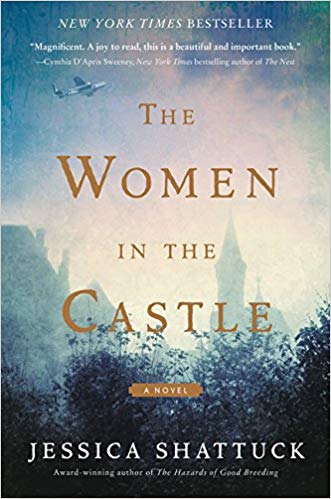
With so many WWII era historical fiction books on the market, The Women in the Castle has the potential to get overlooked. It’s been sitting on my shelf for a few months, but I finally took the time to read it. I’m glad that I did, because it gave me a thoroughly different perspective on the affected people of WWII, highlighting the lives of German women that also had to live with the fallout of being members of a defeated country.
As Germany is attempting to rebuild, three women come to live together at an old castle in Ehrenheim, Germany. Marianne Von Lingenfels, who the castle now belongs to, has vowed to take in the wives of her dead husband’s peers – widowed women whose husbands may have also been resisters of Hitler and now have nowhere else to turn. Benita Fledermann, the wife of Marianne’s good friend Connie Fledermann, comes to live with her along with her son Martin. Later, Ania Graberek also finds solace at the castle with her two sons.
There was a quote that stood out to me about halfway through the novel. “But what are people without their faces? How could you know a man if you can’t see his face?” (198). Marianne asks this of Ania. Marianne is very straightforward, and she believes the world to be black and white – you are either a Nazi supporter or you are not, you are a resister, or you are complicit, you are strong or you are weak. There is no gray area. The reader finds out quickly that Ania and Benita live their lives far more in the gray area, and it is quite possible that they have secrets hiding behind different faces.
The women form a bond through co-parenting, navigating small rations, displaced soldiers who intimidate them on their own land, and their own personal post-war troubles. Benita is a softer woman, easily manipulated. Her demeanor troubles Marianne, who is so adamant about right and wrong. Benita is just seeking solace after the war – she finds love with an ex-Nazi, and Marianne is completely against the arrangement. But Benita asks, “Don’t you want to forget?” She doesn’t want to think about the past any longer, while it seems that Marianne holds on to the past like an anchor, weighing her down.
Ania has her own demons that resurface after the war as well. Finding out her past transgressions, Marianne is judgmental and harsh, again assuming that all situations are dichotomous.
The storyline was riveting, and the characters were staunch. I felt that Benita’s character could have evolved more. I wanted a better ending for her.
The Women in the Castle discusses difficult topics, including the subject of Hitler’s luster as a leader. There is an understanding in the novel that not all of Hitler’s propaganda and shiny promises that enraptured Germany from the beginning came with a heavy hand and clear-cut genocide, but were concealed within promises of a better, more wholesome, self-sufficient country, promises that ordinary people were excited to believe in, hoping for better for their families. There are sides to every story, and this novel forces us to digest that, even if we may not want to remember the uglier sides.

 2 Book Girls